How to Explain Birthstones to Children Without Turning Them Into Rules
Explain birthstones to children as a month-based family tradition, then use names and confirmed months without ranking personalities or importance.
To explain birthstones to children, call them a family and gift-giving tradition that connects each calendar month with a gem name or color. Make clear that a birthstone does not tell anyone how a child should behave or how important that child is. In personalized jewelry, the colored accent simply helps represent a confirmed month beside a person’s name.
Begin with a one-sentence explanation
For a young child, try: “People have made lists that connect the twelve months with different stones, and families sometimes use those colors to remember birthdays.” That is enough to introduce the idea without turning it into a rule.
For an older child, add that traditions and alternatives can vary by place, culture, and era. Different books may show more than one stone for a month. A list is a historical convention people choose to use, not a test that reveals something hidden about the person.
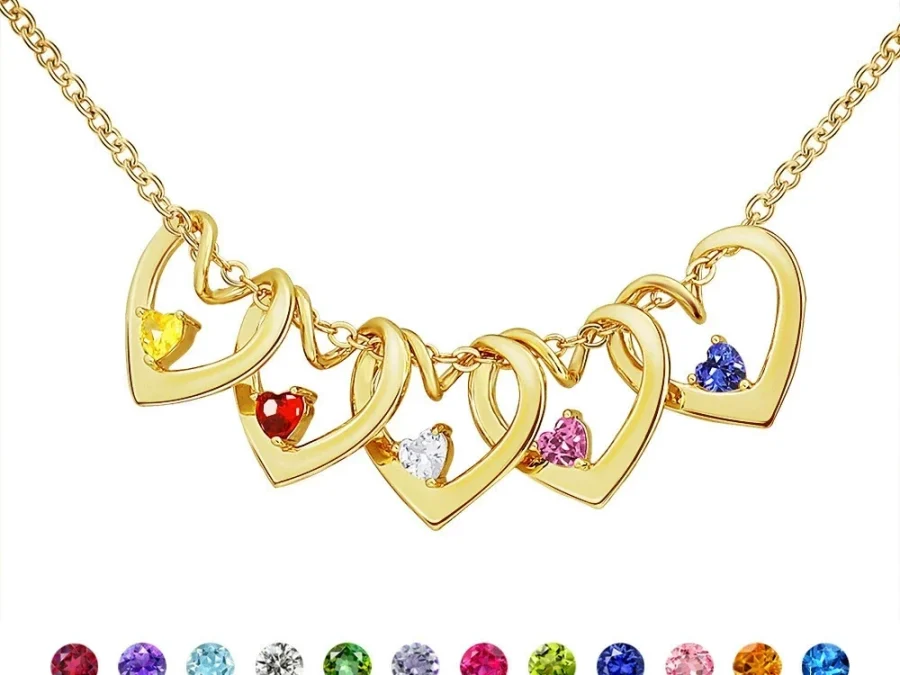
The family birthstone month guide can serve as a visual reference. Read the month names together before discussing symbolic stories.
Keep personality outside the color chart
Children often ask whether a red month means someone is brave or a blue month means someone is calm. You can answer: “Those are stories people may tell about colors, but the color does not decide who you are.” Then invite the child to name qualities they know from real experience.
Avoid comparing siblings through month symbolism. One color is not stronger, kinder, rarer, or more special in a way that ranks children. Repeated colors are not less interesting. If two children share a month, the matching accents accurately record a shared fact while their names preserve individual identity.
This approach also leaves room for a child who dislikes the traditional color. Preference is different from birth-month accuracy, and a name-led design may suit that child better.
Turn the lesson into a name-and-month activity
Create twelve paper squares labeled January through December. Ask the child to place each family member’s approved name on the correct square. Confirm birthdays with an adult source rather than letting the activity turn guesses into order details.
Then ask three factual questions:
- Which family members share a month?
- Which months are not represented in this particular family list?
- How many people need a place on the chosen design?
The activity teaches that birthstone personalization is a mapping system. It does not ask the child to choose a “better” color or interpret another person. If the colors will be used on a gift, an adult should perform the final spelling and month check.
For a group of children, let each child place only their own confirmed name card first. Then build the family map together. If someone complains that another month color looks brighter, return to the calendar idea: each square has the same job, and brightness is not a score. Ask children to find another equal pattern, such as the same number of name cards or one leaf for every person.
You can also invite them to create a separate drawing using any favorite colors. This shows that creative color choice remains available without changing the meaning of the month labels on the jewelry.
Connect the explanation to a real product carefully
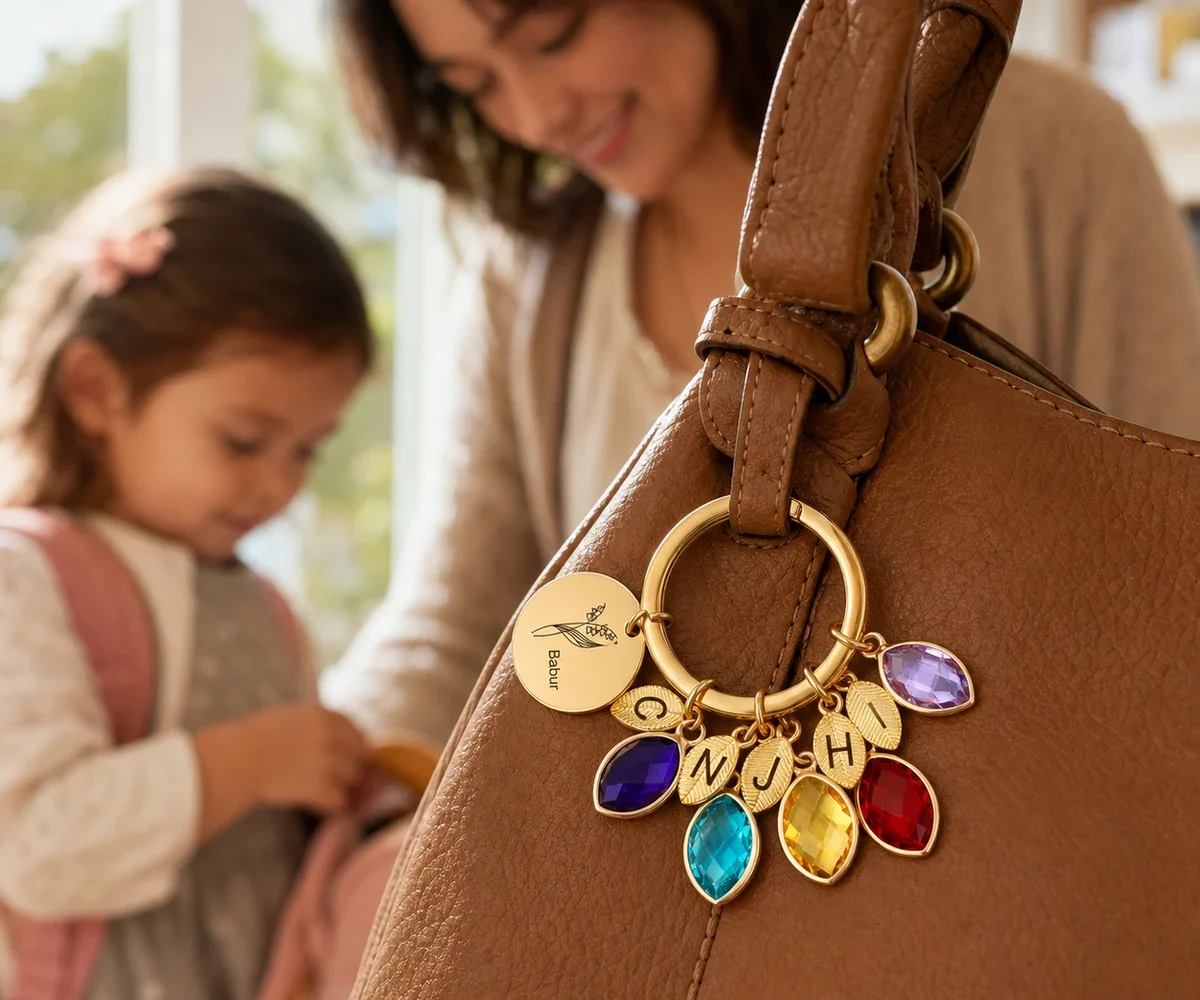
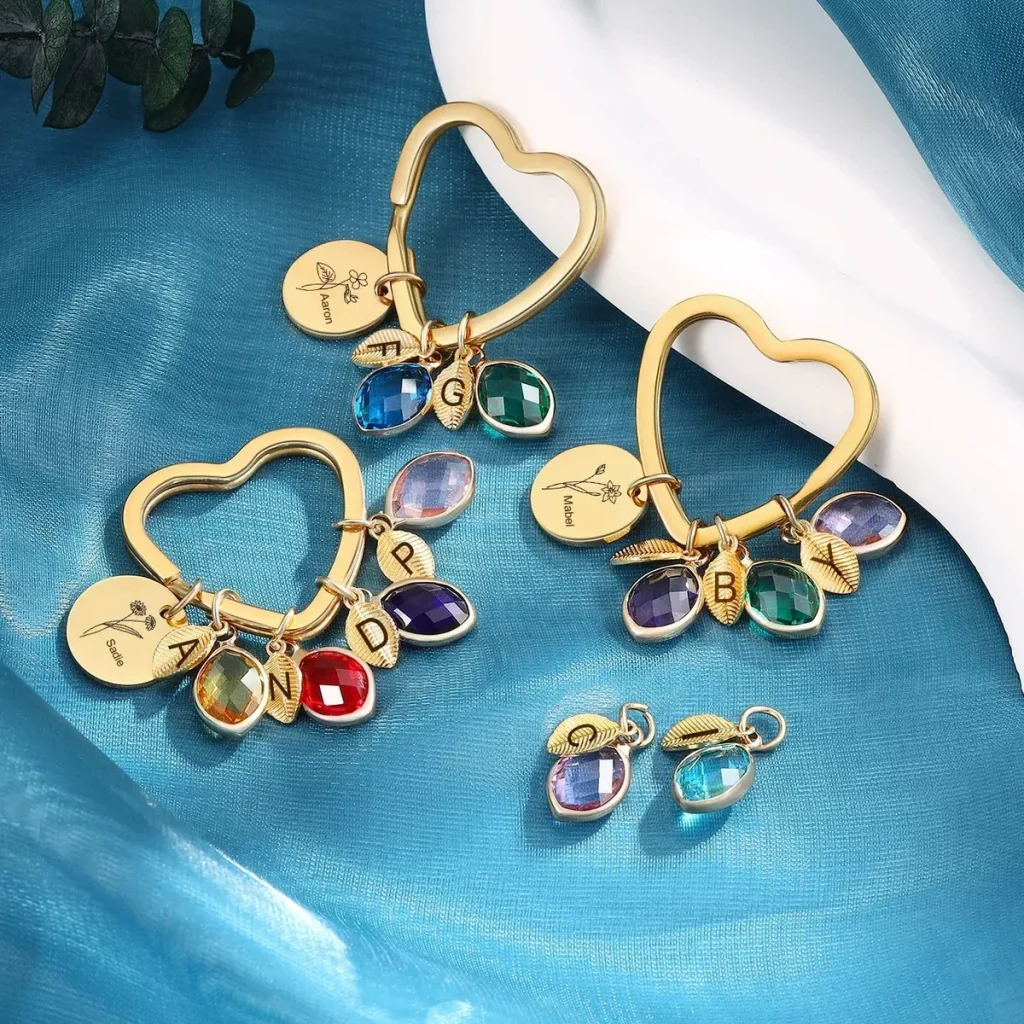
The Family Branch Birthstone Bangle and keyring supports one to five engraved name leaves, each paired with a simulated birthstone choice. The design can be an adjustable bangle, round keyring, or heart keyring. A child can see how one leaf, one name, and one month belong together.
Describe the colored details accurately as simulated birthstone or crystal-style accents, not as proof of a particular gem material. Let the child help review the family map, but an adult should control the product fields, quantity, tone, and Special Note.
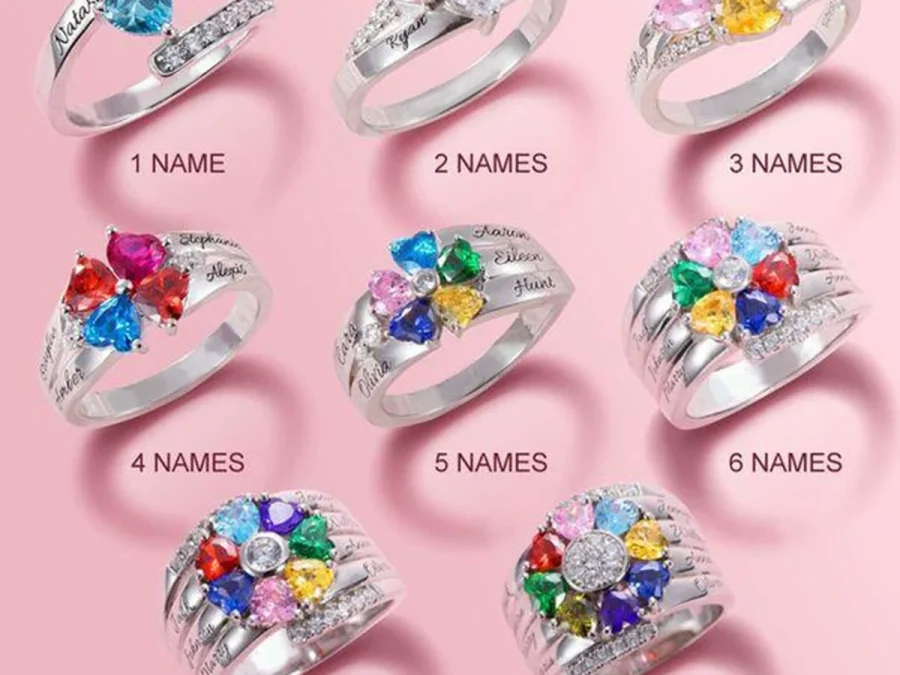
If the number of people exceeds the current one-to-five structure, do not ask the child to choose who matters most. Compare other capacities in the Amorieva collection and select a design that can include the intended group.
Common questions
What if a child says the chart is wrong?
Ask which source or family tradition they know. Explain that lists can have alternatives and vary over time. For an order, use the actual month label offered by the product and keep the family’s explanation clear.
How do I explain two people having the same color?
Say that they share a birth month, just as two people can share a favorite season. Their engraved names and positions still identify them as separate people with equal places in the family.
Should a child choose another person’s month accent?
The child can help arrange a confirmed list, but the month should come from the person’s actual birth date. Let creative choice happen in tone, format, or presentation where the current product offers it.
Make the tradition curious, flexible, and kind
A child only needs three core ideas: birthstones are a tradition, months provide the labels, and colors do not define people. Use real names and verified dates, welcome questions about different lists, and avoid ranking siblings through symbols. Amorieva’s family-story perspective can support the bigger lesson: personalization matters because of the relationships people live, not because a chart tells them who they are.