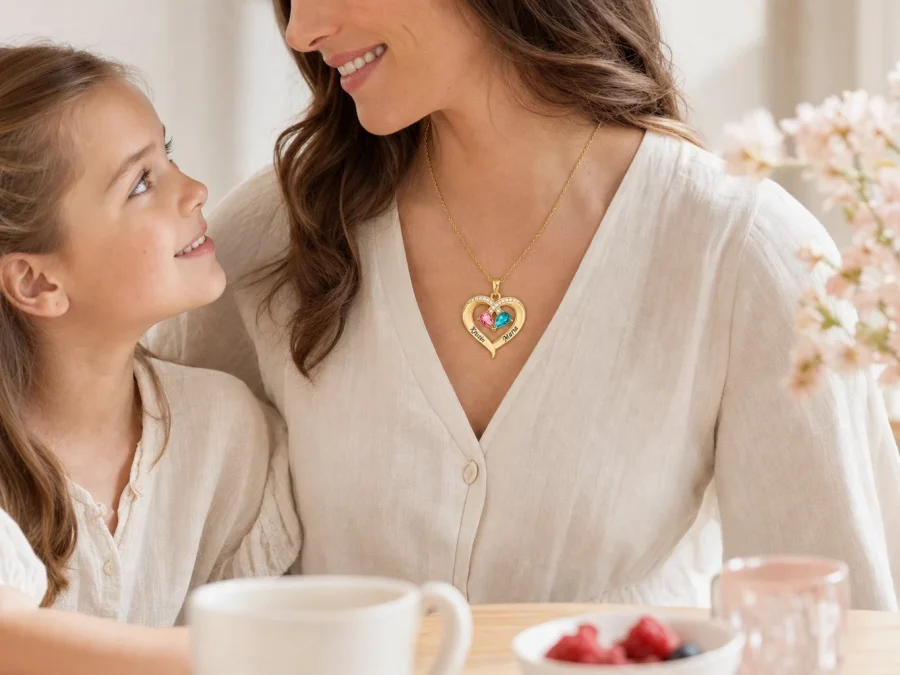
How Adult Siblings Can Plan One Personalized Gift for Mom
Give adult siblings one clear workflow for agreeing on a personalized gift for Mom, verifying family details, assigning roles, and approving the final order.

A joint personalized gift for Mom is easiest to plan when adult siblings separate family facts from style opinions. Build one verified list of names and birth months, choose a product that fits that list, assign one buyer, and require one final approval. A single shared record prevents duplicate orders, mismatched spellings, and last-minute changes hidden in different group messages.
Agree on the story before discussing the product
Start with one sentence that defines what the gift represents. It might include Mom’s children, her children and partner, or another group she identifies as central. Do not expand the list merely because one sibling proposes another possible relative. Ask whether Mom would recognize and want that exact set displayed.
Then write one row per person with the preferred engraved name and confirmed calendar birth month. Mark any unresolved fact visibly. Style debate should pause until every required fact is either verified or intentionally excluded.
If the siblings cannot agree on who belongs in the design, choose a less specific gift or involve Mom. Personalization should not turn a family boundary question into permanent text.
Give each sibling one defined role
A small team works better than a group in which everyone edits everything. Assign these roles:
- Coordinator: keeps the master list and records decisions.
- Fact checker: verifies spellings and birth months from reliable family sources.
- Style checker: compares Mom’s usual jewelry, finish preference, and pendant habits.
- Buyer: enters the approved fields exactly and saves the submitted record.
One person can hold more than one role, but only the coordinator should change the master list. Use Amorieva’s personalized ordering steps to turn the agreed facts into a field-by-field checklist.
Test the list against a real product structure
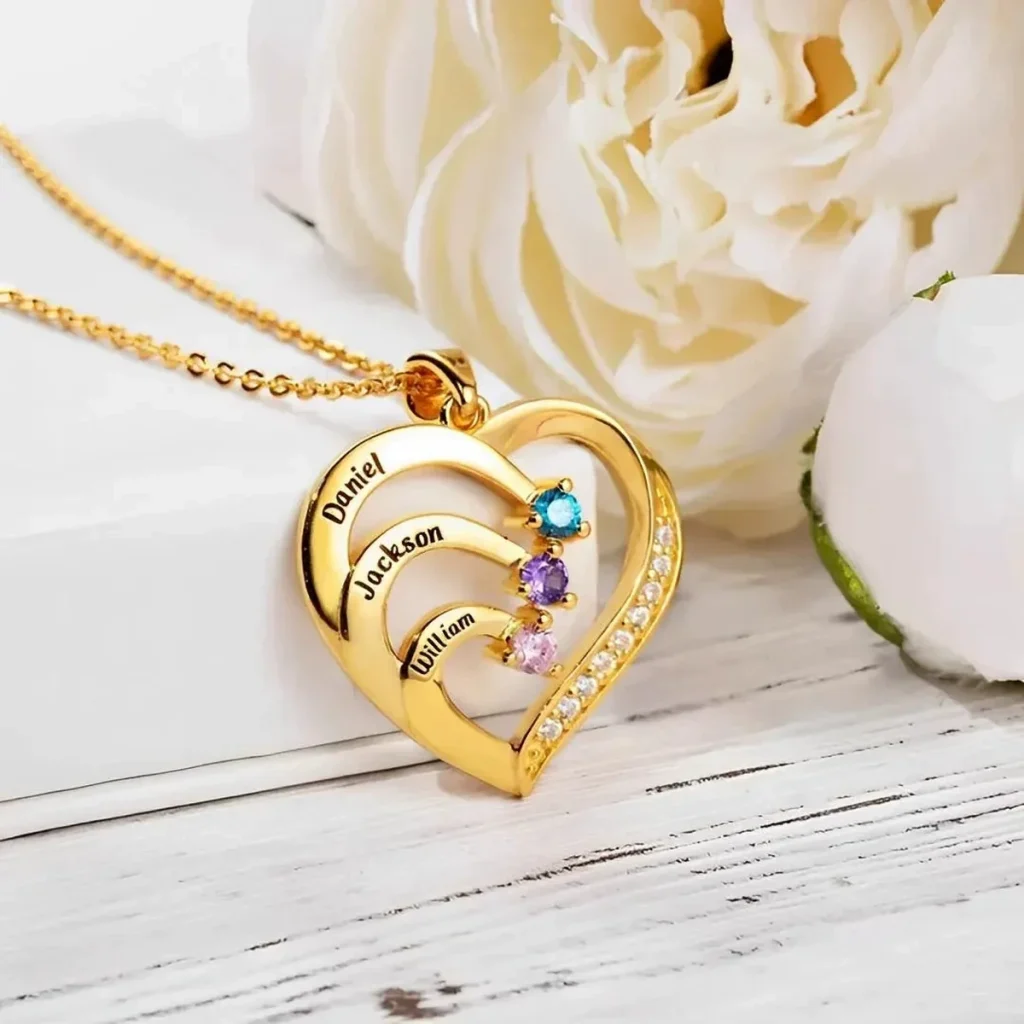
The Family Embrace Heart Necklace currently supports one to six loved ones, with each engraved name paired to a simulated birthstone selection. It offers three finish tones on a plated mixed-metal heart design. It is a candidate when the approved list contains no more than six people and Mom likes a layered heart pendant.
Count the final rows before choosing it. If there are seven or eight confirmed names, do not compress two people into one field merely to preserve the product choice. Compare other current structures through the Amorieva family jewelry collection, including name-only options, and decide which tradeoff the siblings can explain clearly.
Also make sure every name has a matching month. A repeated month is valid when siblings share a birth month. The visual palette does not need artificial variety; accuracy comes first.
Resolve money and timing without changing the facts
Decide the total spending limit and each sibling’s contribution before the buyer reaches the order form. Contribution amount should not determine whose name receives a preferred position. Use the agreed family-order rule—such as oldest to youngest—consistently.
Set an internal approval deadline early enough to review the product’s current shipping information without rushing. Delivery details can change, so the buyer should check the live policy rather than repeating an old estimate in the group. If the occasion is too close for a comfortable timeline, reveal the planned gift and let Mom participate rather than submitting unverified fields under pressure.
Keep the contribution discussion in a separate document from the personalization sheet. The order record should contain only the approved product details. Separating money from name order prevents a larger contribution from being mistaken for a reason to control the family layout, and it gives the buyer a clean source to copy.
Use a two-stage approval
For the first approval, share a plain-text summary: product, people, names, months, order, and finish tone. Each sibling responds only with corrections. The coordinator resolves conflicts and freezes the list.
For the second approval, the buyer compares the completed form with that frozen summary. Read each row aloud, count the entries, and check that no browser autofill or copy-and-paste shift has changed a field. The Amorieva personalization FAQ should resolve any product question before the final submission. A separate digital design proof is not promised, so this review is not ceremonial.
After submission, share the factual order summary with the participating siblings while withholding any presentation details that would reach Mom. This gives the group one opportunity to notice a confirmation mismatch promptly without inviting a fresh round of aesthetic edits.
Common questions
Should every sibling’s full legal name be engraved?
Use the form of each name Mom knows and prefers, provided it fits the current product field. Confirm nicknames, capitalization, and spelling rather than defaulting automatically to legal names.
What if one sibling does not want to be included?
Discuss the reason privately and respectfully before ordering. Do not add or omit a name by majority vote alone if the result could misrepresent a sensitive family relationship to Mom.
Who should place the order?
Choose one detail-oriented buyer who has the frozen approval list and can retain the confirmation. Multiple siblings should not place parallel orders or independently “correct” fields after approval.
Turn collaboration into one clean record
A sibling group can add care and perspective to a gift, but only if its decisions converge. One story, one verified list, one product structure, and one buyer create that convergence. The finished piece can then represent the family without also carrying the confusion of the planning chat.