Vow Renewal Jewelry After a Name Change: What to Engrave
Choose vow-renewal engraving after a name change by separating each partner's current identity from shared history and obtaining clear consent.
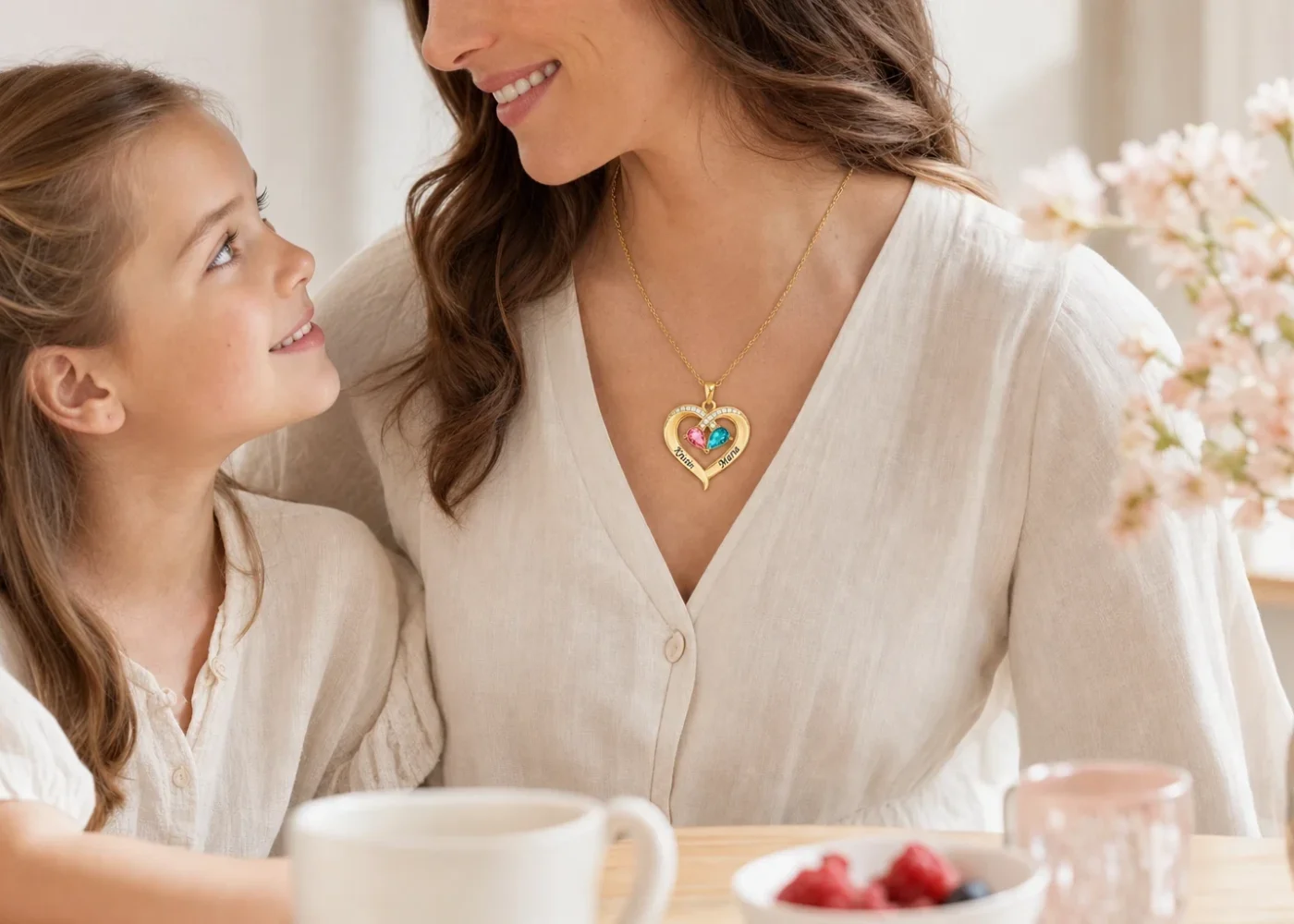
For vow renewal jewelry after a name change, engrave the name each partner consents to display now. A former surname, wedding-day name, current surname, or hyphenated form can all carry shared history, but none should override a person’s present identity. Ask each partner independently, compare current identity with the intended historical meaning, and treat uncertainty as a reason to pause rather than choose for them.
A name change can carry more than one story
One partner may have changed a surname at marriage, returned to a former name, adopted a hyphenated form, or begun using a different preferred name years later. Another may use one name legally and another professionally or socially. Vow renewal does not create a universal rule about which version is most meaningful.
The wedding-day name can represent a remembered moment, while the current name represents the person standing in the renewed commitment. Those meanings are not automatically in conflict. The engraving decision becomes respectful when the person whose name will appear decides which meaning belongs on the jewelry.
Do not use old invitations, certificates, social profiles, or family habits as final permission. They can help identify possible spellings, but they cannot establish what someone wants displayed today. This article addresses an engraving choice, not legal name status or the validity of any relationship history.
Use a current-identity versus shared-history decision tree
Begin with one question for each partner: “Which name would feel like you if you saw it engraved now?” If the answer is a current name, use that form. A vow renewal can honor a long history without requiring the jewelry to reproduce the names used at the original ceremony.
If a partner volunteers a former or wedding-day name, ask what it is meant to represent. Choose it only when that person wants the historical reference to be visible and the other partner understands the choice. Nostalgia supplied by the gift giver is not consent.
For a hyphenated name, confirm the complete form, capitalization, spaces, and hyphen placement. Ask whether the person uses the full compound name in everyday settings or prefers one part for a small engraving. Never shorten it merely because a shorter version looks more balanced.
If the answers are mixed or tentative, stop. One partner can use a current name while the other uses an approved historical form; the two engravings do not need to follow the same naming rule. Consistency is less important than accurate identity.
Obtain two independent approvals
A couple may make many shared decisions, but each person controls their own displayed name. Ask separately enough that neither partner feels pressured to preserve a surname, restore an old form, or accept a title for the sake of symmetry.
Use neutral prompts:
- What exact name would you want visible on the piece?
- Would a former or wedding-day name feel affectionate, outdated, or uncomfortable?
- If the name is hyphenated, which complete written form should be copied?
- Is this name acceptable in a piece that may be seen in public?
Do not ask one partner to approve the other person’s identity. They can confirm the shared-history meaning together, but the final spelling and name form should come from the individual represented.
Fit the approved names to the two-name structure
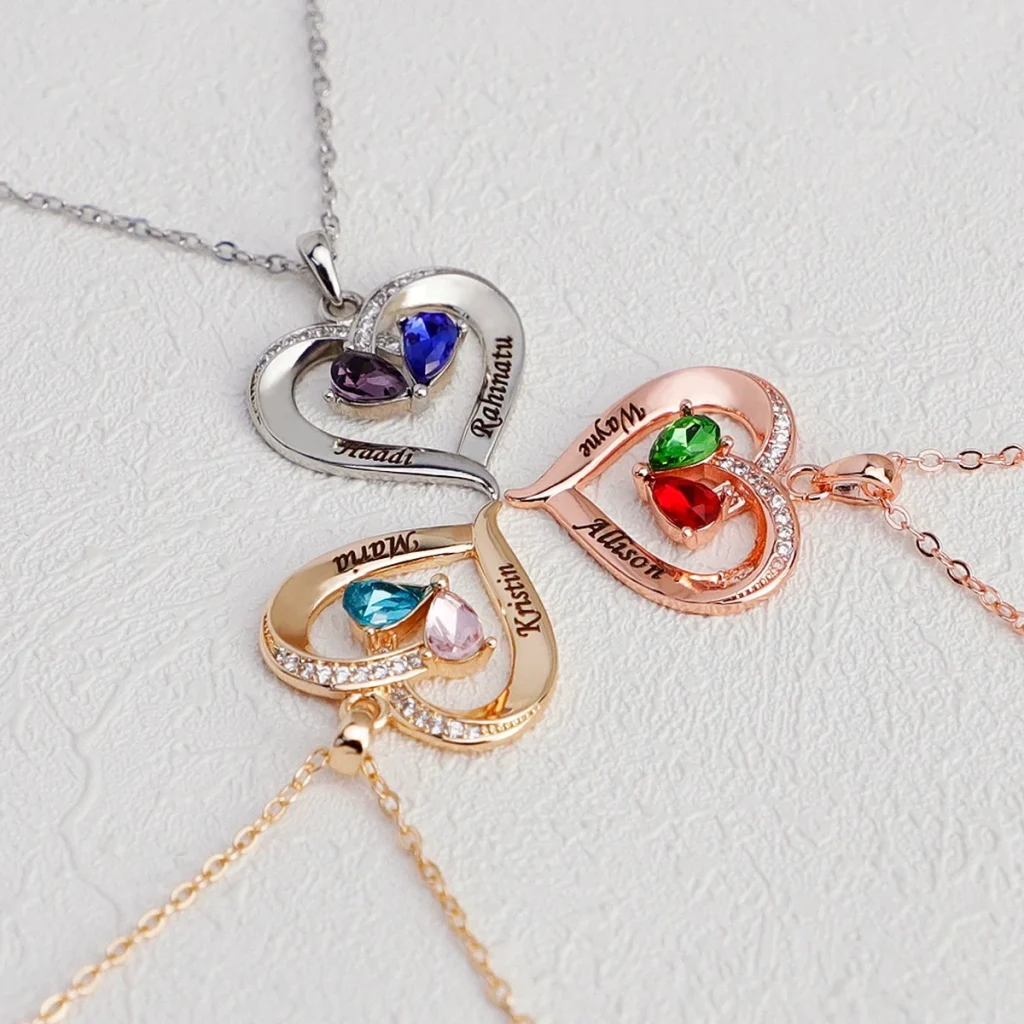
The Two-Tone Teardrop Story Necklace has exactly two name fields, one for each represented partner. It also has two birth-month fields, three plated tone choices, and a crystal-set or smooth engraved heart option. Those additional fields are separate product inputs; they do not decide which name form belongs in either engraving position.
The product does not provide a third dedicated field for a former surname or a written explanation of the change. Do not place an unapproved old name in a required position or assume a general note creates another engraving area. If both current and former names are essential to the story, keep the fuller explanation in your own private message or choose a current product whose documented fields support the intended text.
Long or hyphenated names also need a fit check. The general personalization input limit is not a promise that every long form will appear exactly as imagined on every design. Review the live field and ask a product-specific question through the current guidance before shortening, removing punctuation, or substituting initials.
Proof the identity, not just the spelling
Spelling can be technically correct while the selected name is personally wrong. Use a two-part approval record: first the chosen identity form, then the exact character sequence. Have each partner type their own line when possible.
Compare capitalization, apostrophes, hyphens, spaces, and diacritics with that direct approval. The existing engraving guidance can help separate concise supported text from a longer message, while the personalization process explains how to review live fields before submission.
Keep the approval record private and factual. It can read, “Samira chose current hyphenated surname,” or “Eli chose wedding-day first name only.” It should not speculate about why a name changed or ask the engraving to resolve a disagreement the couple has not resolved themselves.
Common questions
Should vow renewal jewelry use the names from the original wedding?
Only if each partner wants that historical reference. The original wedding record does not overrule a current preferred name.
Can one partner use a current name and the other a former name?
Yes, when both choices are independently approved and the shared meaning is understood. The two names do not need to follow one matching rule.
Can a former surname be added as a third engraving?
The current Two-Tone Teardrop structure has two name fields, not a dedicated third history field. Do not assume an extra engraving is available unless the current product page explicitly provides it.
Renew the promise without erasing the present
A vow renewal can honor years of shared history while using the identities the partners claim today. Ask before choosing nostalgia, preserve every approved character, and let each person decide whether a current, former, or hyphenated name belongs on the piece. The right engraving is not the name that recreates the past most neatly; it is the one both people can recognize and welcome now.