Which Hand Should Hold a Personalized Family Ring?
Choose a hand and finger for a family ring from the recipient's real habits, existing rings, dominant-hand use, and repeated size measurements.
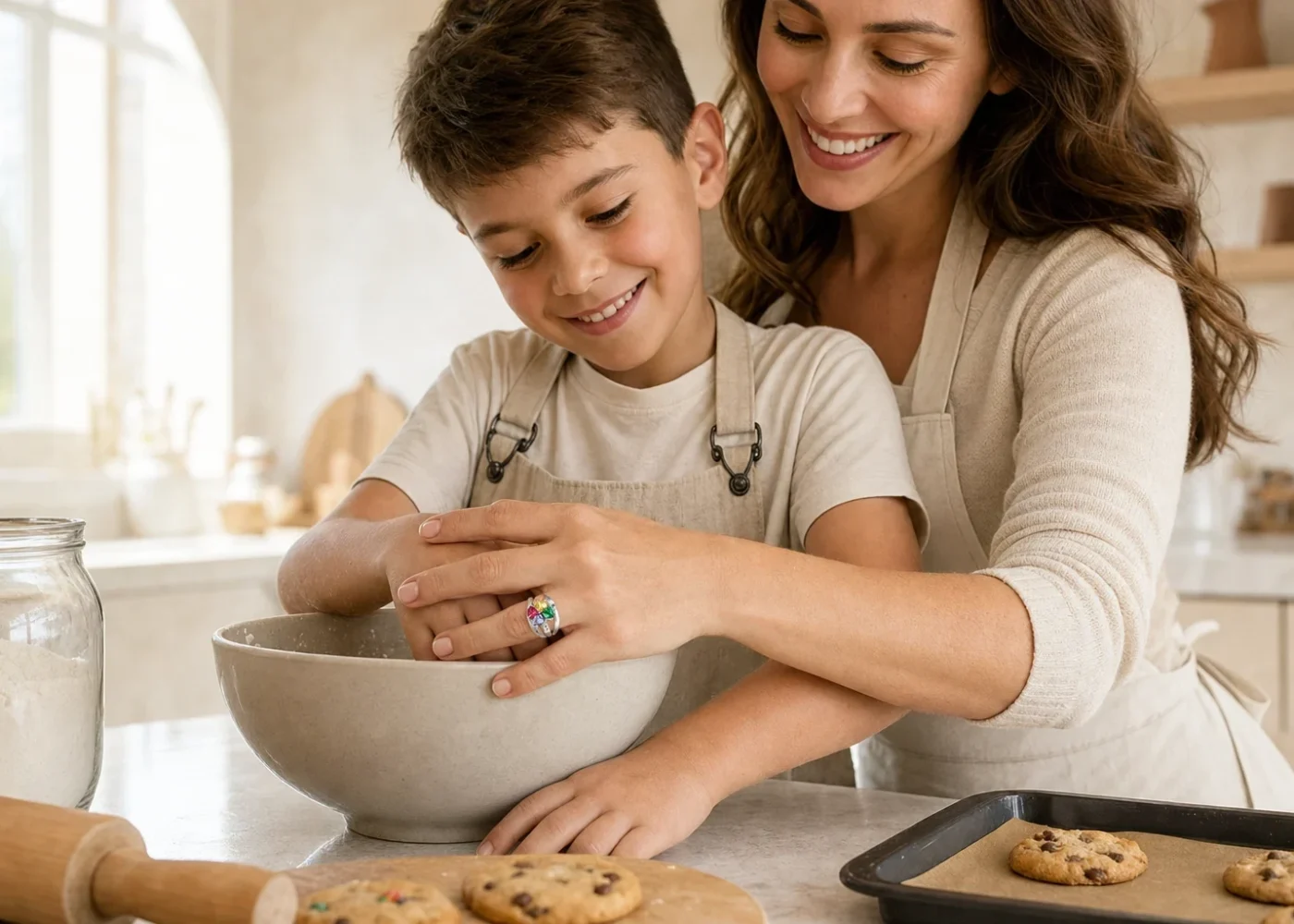
Which hand should hold a family ring? The hand and finger the recipient will actually use, based on existing ring habits, comfort, work, and other jewelry. There is no universal symbolic hand for personalized family jewelry. Choose the position first, then measure that exact finger repeatedly. A size from the opposite hand or a neighboring finger should not be treated as interchangeable.
Start with the rings already worn
Observe which hand and fingers the recipient uses for everyday rings. Note whether one position is reserved for a wedding, commitment, inherited, or other meaningful ring. A new family ring should not displace an established piece without the wearer’s preference.
Ask whether the person stacks rings or wears one per hand. A personalized cluster may feel visually denser than a plain band, so compare the complete outline with the jewelry already on that hand.
Consider dominant-hand routine
The dominant hand may write, lift, open doors, use tools, and contact surfaces more often. Some people prefer rings on the less active hand; others are accustomed to the dominant one. Do not turn this observation into a rule.
Review work requirements, gloves, instruments, exercise, caregiving, and hobbies. If a ring must be removed for much of the day, decide whether another finger, hand, or jewelry format would be used more naturally.
Create a two-column routine check for left and right hands. Note writing, mouse use, tools, watch position, existing rings, and when jewelry is removed. The column with fewer conflicts is a candidate, not an automatic winner; the recipient’s comfort and meaning still decide.
Measure the exact intended finger
Use Amorieva’s ring-size measurement guide after the hand and finger are selected. Measure more than once under ordinary conditions and compare with a correctly fitting ring worn on that exact position when available.
Hands can differ, and neighboring fingers can differ. Label the result clearly: “right ring finger,” not simply “size 7.” If repeated measurements disagree, pause and seek more reliable sizing rather than averaging casually.
Repeat measurements at different ordinary times rather than immediately after unusual heat, cold, or strenuous activity. Follow the measurement guide consistently each time. Record the method with the result so two different techniques are not averaged as though they were equivalent.
A surprise should not depend on secretly estimating size from height, clothing, or a ring worn on another finger. Share the sizing decision if necessary.
Apply the choice to the family constellation ring
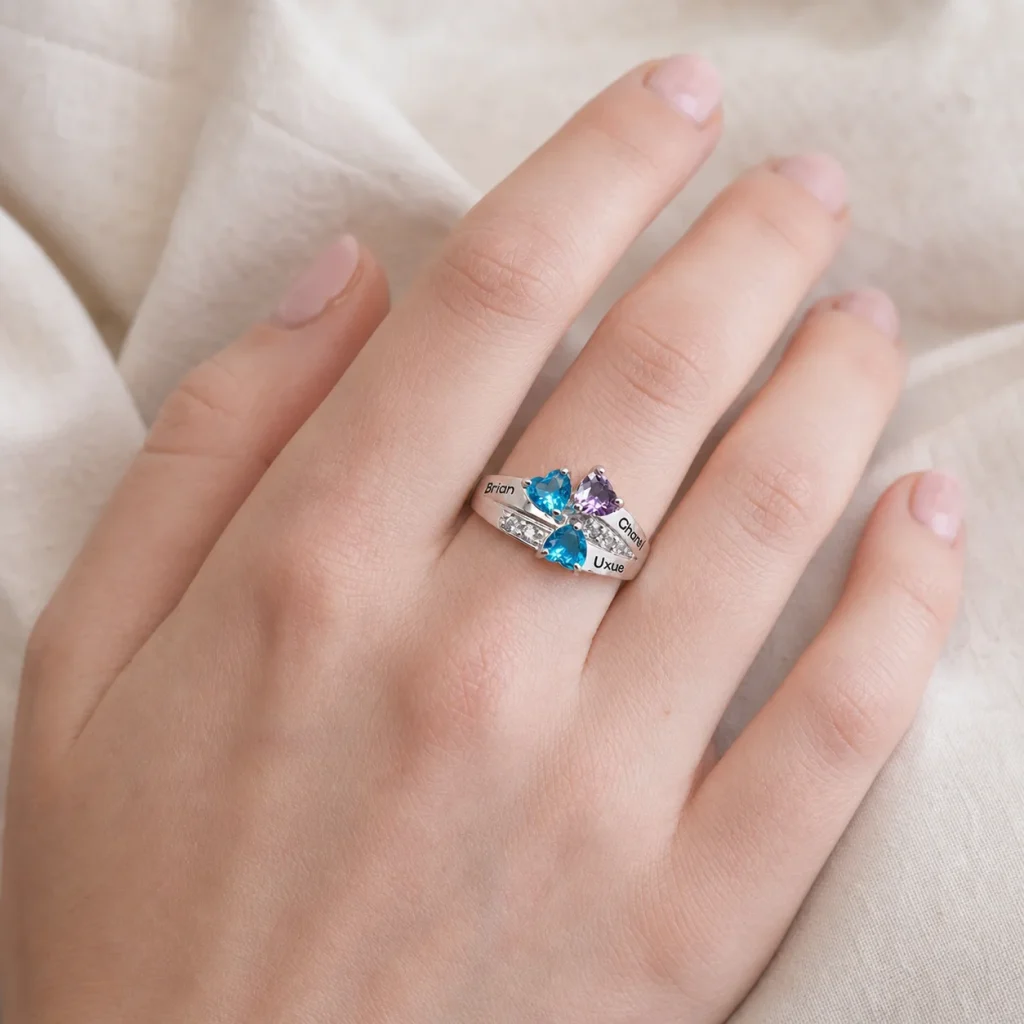
The Family Constellation Name Ring currently comes in US sizes 6 through 10. It supports one to eight simulated birthstone accents and name or short engraving on a plated metal design. It is not presented as an adjustable ring.
Select the US size only after matching it to the intended hand and finger. Then review accent count, month order, and engraving separately. The product does not currently offer a three-tone finish selector, so do not add a color decision from another Amorieva design.
If the correct measurement falls outside the current US 6-to-10 range, do not choose the nearest available size and hope the other hand will work. Compare another personalized format through the Amorieva collection or ask a current product question before ordering.
Test the visual role of each hand
View a similar-size ring on both hands if the recipient participates. Compare how the cluster interacts with watches, bracelets, wedding rings, and ordinary gestures. The goal is not to find a culturally “correct” hand but the position where the person recognizes the piece as part of their routine.
Plan care as well. Keep the plated ring dry, remove it before showering, swimming, exercise, saltwater, and chlorinated water, avoid perfume and household chemicals, wipe gently, and store separately. The Amorieva care guide provides details.
For a surprise, invite the recipient to select the hand and size while keeping the family accent order private. A partially shared decision can preserve the design reveal and avoid a fixed-size guess.
Save the chosen hand, finger, measurement, US size, and date in the order record. “Size 7” alone is not enough context for a future reorder or support question.
Common questions
Must a family ring go on the right hand?
No. Use the hand and finger the recipient prefers and can measure accurately. Personal habits and existing meaningful rings matter more than a universal rule.
Are the same fingers equal in size on both hands?
Do not assume so. Measure the exact intended hand and finger, repeat the check, and label the result with the position.
Can I resize the ring later?
Do not plan on later modification. Confirm current support if the question arises; choose the correct available US size before submitting the personalized order.
Choose the position before the size
A ring size without a hand and finger is incomplete information. Observe the recipient’s habits, protect established jewelry meanings, and measure the chosen position carefully. The family story can then occupy a place the wearer selected rather than a hand assigned by convention.
Reconfirm the position aloud during final review: hand, finger, US size, accent count, and engraving. This short sequence prevents a correct measurement from being attached to the wrong finger.