Topaz vs Citrine: Why November Has Two Birthstones
Topaz and citrine are different gem materials that share November. Compare their identities and colors without misreading a simulated month accent.
Topaz and citrine are two different gem materials that share a place in November birthstone traditions. Topaz is its own mineral species and occurs in a wide range of colors. Citrine is the yellow-to-orange variety of quartz. Their overlapping warm colors helped create historical confusion, but a modern personalized jewelry selector does not ask shoppers to identify either mineral: it asks them to choose November.
Topaz and citrine are not two names for one stone
The GIA November birthstone reference presents both topaz and citrine. It describes topaz in colors that can include colorless, blue, yellow, orange, pink, violet, brown, and rare red. Citrine occupies a narrower family of yellow, orange, and brownish orange appearances because it is a variety of quartz.
That difference begins with identity, not shade. A yellow topaz does not become citrine because their colors overlap, and a warm citrine does not become topaz because an old label or photograph looks similar. Gem identification depends on physical and optical properties that cannot be established from a small online image.
For a shopper, the useful lesson is simple: birthstone traditions can place distinct materials under the same month. The shared month is cultural classification, not evidence that the gems have the same composition or behavior.
Color range explains both variety and confusion
Topaz can extend far beyond the golden color many people expect from November. Citrine can range from lighter yellow to deeper orange or brownish orange. Lighting, cutting, and photography add more visual variation, so two natural examples may not resemble a simplified chart swatch.
Treatment can also be part of a natural-gem product’s disclosure. GIA notes that much blue topaz is produced through irradiation and heating, and much citrine in the market results from heating amethyst. Those facts matter when buying the named natural gems. They must not be copied onto an Amorieva simulated accent, whose description and care should come from its own current product page.
This is why “golden November stone” is too vague for material identification. It may describe an impression, but it does not answer whether an item is topaz, citrine, a different gem, glass, crystal, or another simulated material.
Care guidance is another reason to preserve the material boundary. Natural topaz and citrine do not have identical durability profiles, while a plated charm also includes its setting and finish. Follow the documented care for the item actually owned instead of borrowing instructions from the month tradition.
Use November as an ordering label
When the product form offers January through December, start with the represented person’s confirmed birth month. If it is November, choose November. Do not switch to another month because its preview looks closer to a preferred shade of natural topaz or citrine.
Maintain two records if the family enjoys the gemological story. The first can say, “November traditions include topaz and citrine.” The second should copy the actual order language, such as “November simulated birthstone charm.” The first is educational context; the second is the product fact.
The family birthstones by month guide can help pair a complete roster with month labels. It should not be used to certify the material shown in a product image.
Map names and months on Family Branch
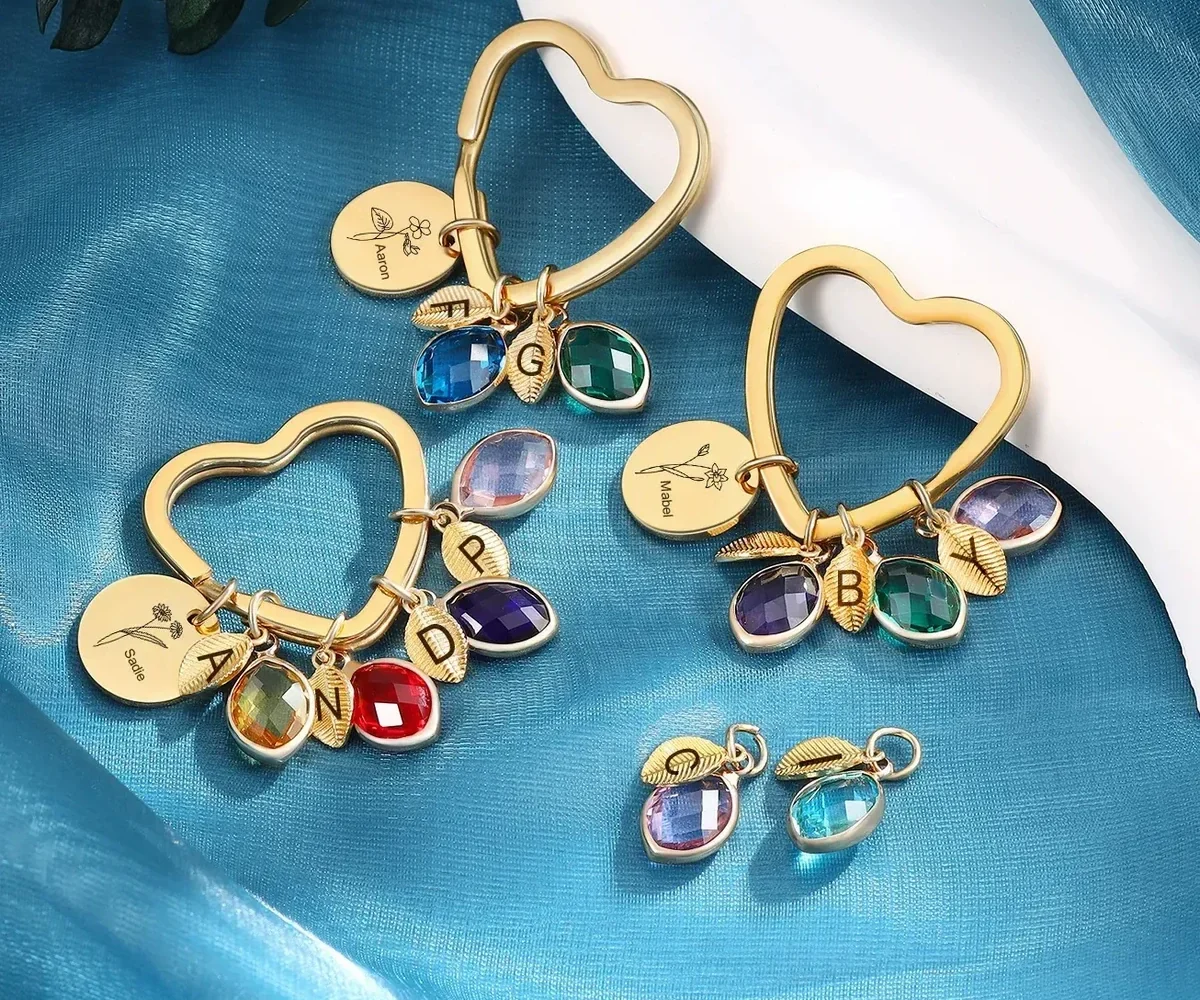
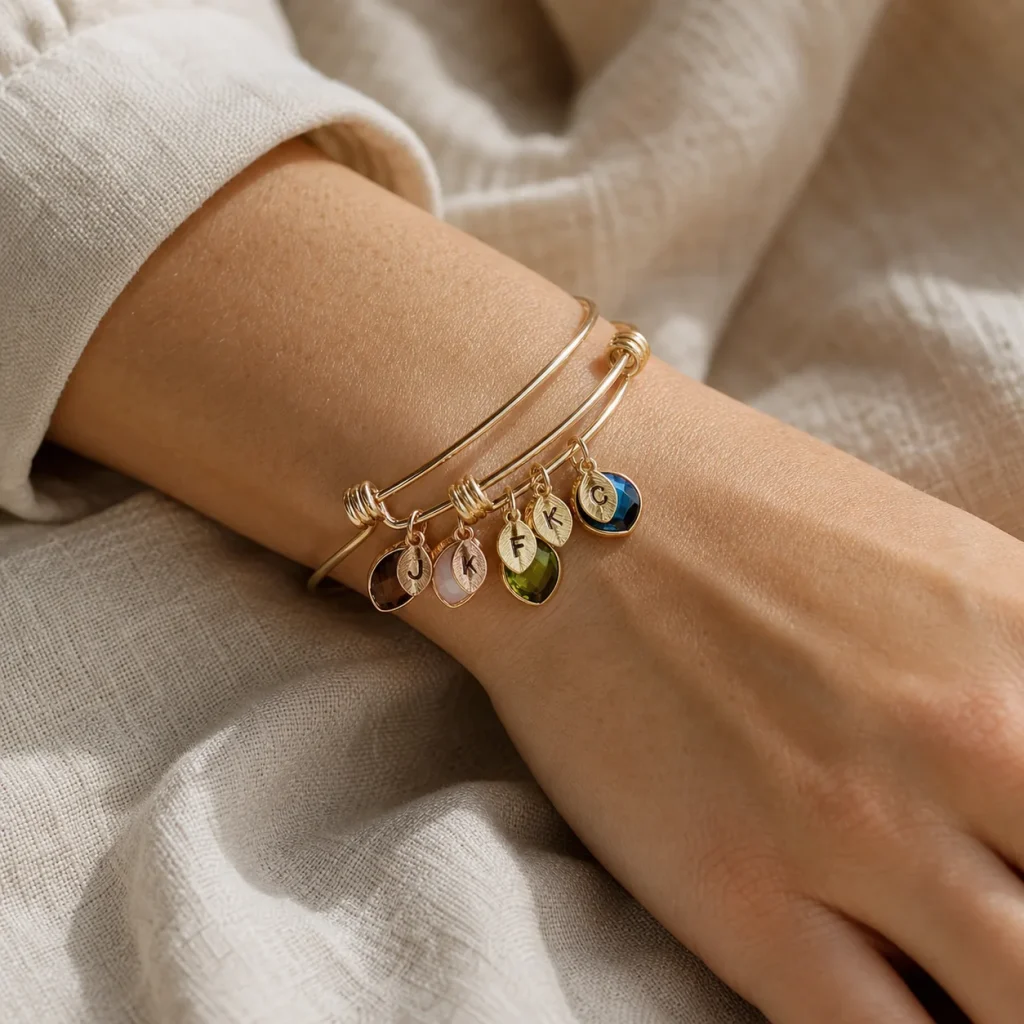
The Family Branch Birthstone Bangle currently offers an adjustable bangle, round keyring, or heart keyring format. It supports one to five engraved name leaves, each paired with a simulated birthstone month charm. A center-disc message can be specified through the Special Note field.
For each represented person, write the approved name and month on one line. Check that the number of leaves and charms agrees with the roster. Handle the format choice, tone, and center note as separate fields rather than letting a preference for “golden” color alter the November data.
If more than five people need representation, compare a suitable design in the current collection. Do not hide a sixth name or month in the center note and assume it will create another leaf-and-charm position. Product-specific questions belong in the FAQ or a support request made before ordering.
Review the distinction before checkout
- Topaz and citrine are separate natural gem materials.
- Both appear in recognized November traditions.
- Their natural color ranges are broader than one golden swatch.
- An Amorieva November charm is a simulated month cue.
- Every leaf should retain its approved name-and-month pairing.
- Natural-gem treatment or care facts should not be transferred to the simulated charm.
Common questions
Is citrine a type of topaz?
No. Citrine is a variety of quartz, while topaz is a different mineral species. Similar warm colors do not make them the same material.
Why does November have two birthstones?
Birthstone traditions developed and changed over time, and more than one gem became associated with November. The association is cultural rather than a statement that the materials are equivalent.
Which gem is in an Amorieva November charm?
The current Family Branch product describes simulated birthstone charms selected by month. It does not identify the November charm as natural topaz or citrine.
Share the month without blurring the materials
Topaz and citrine can share November while remaining scientifically and visually distinct. That richer context can make a gift explanation more interesting, but the order itself should stay exact: confirm the person, choose November, preserve the name pairing, and describe the charm with the product’s simulated-birthstone language.