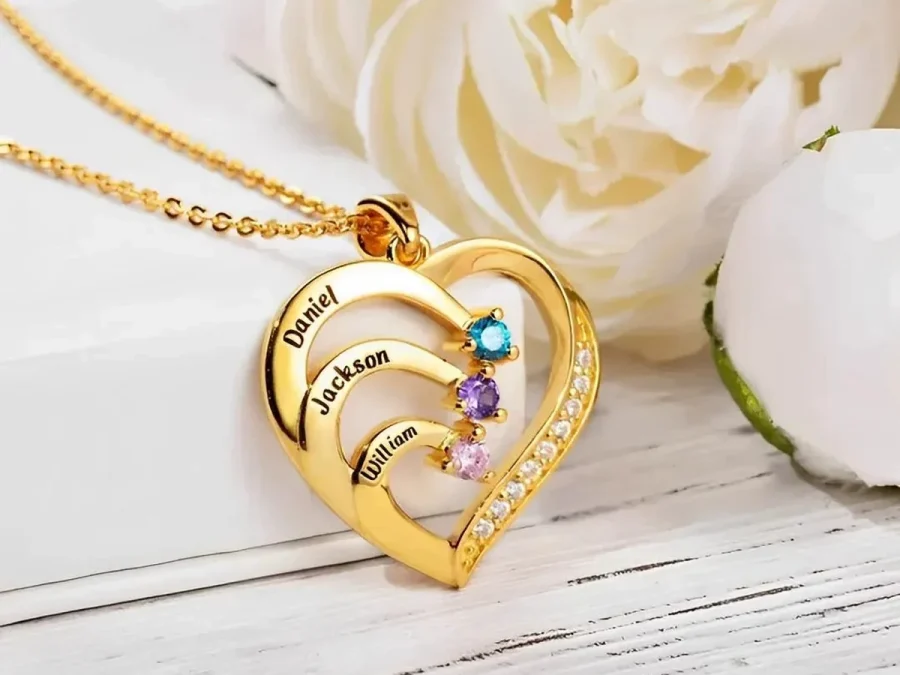
Personalized Jewelry for a Foster Parent: Confirm What Can Be Shared
Plan jewelry for a foster parent by confirming which names and relationship terms can be displayed, who will wear each piece, and what should remain private.
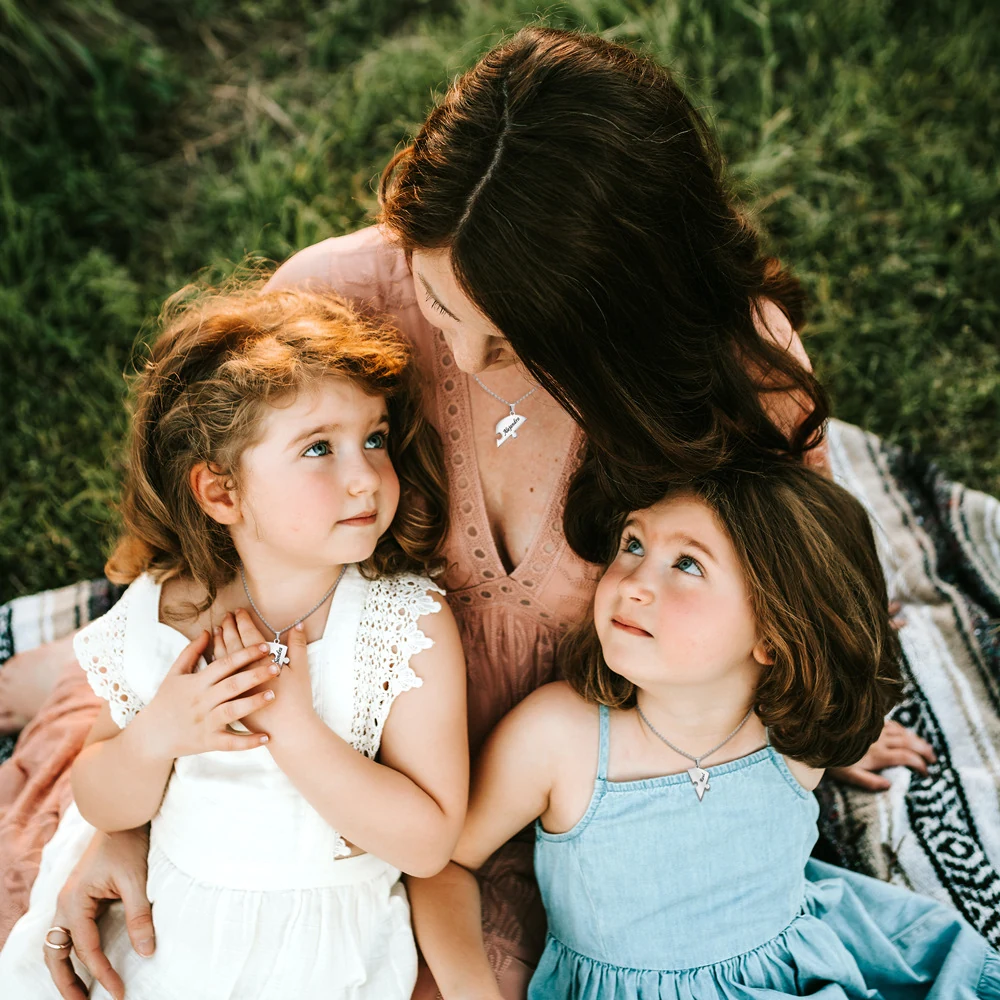
Personalized jewelry for a foster parent should be planned around permission and privacy, not assumptions about which names, dates, or family terms can be displayed. Confirm the recipient’s preferred language, who is allowed to approve each child’s information, where the piece will be visible, and who will wear it. If any displayed detail is uncertain, choose a less identifying gift.
Begin with what can be shared
Ask an appropriate responsible adult which information may appear on a wearable object and in photographs. A first name, nickname, initial, placement date, or relationship term can carry different privacy implications. Do not assume that information known within the household is suitable for public display.
Use only the amount of information needed for the design. A gift does not need a full legal name, date, school reference, or case history to feel personal. Keep private planning records separate from the engraving worksheet.
Clarify whether approval covers the physical engraving, photographs, and public wearing separately. Someone may approve a first name on a private keepsake but not a close-up image online. Record each decision without storing unnecessary case information beside it.
Use the foster parent’s language
Some recipients may use “family,” “our household,” a child’s chosen name, or another relationship phrase. Others may prefer a symbol without a public label. Ask rather than selecting language that frames the placement as permanent, temporary, parental, or complete on the recipient’s behalf.
Respect changes in context. A term that was appropriate earlier may no longer fit. The final approval should reflect the present relationship and the people directly affected, not an old social post or saved gift idea.
Evaluate a shared puzzle design carefully
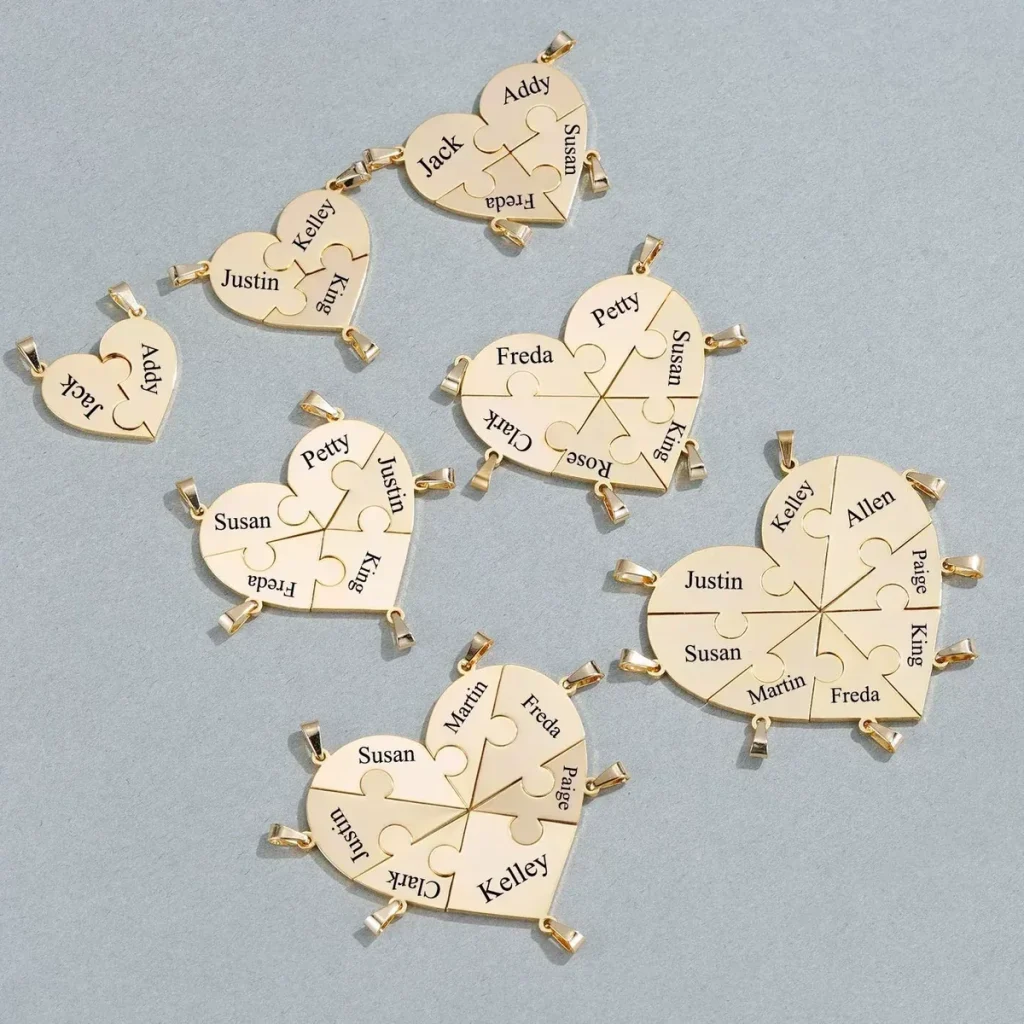
The Together Heart Puzzle Necklace is a plated stainless-steel design with two or three interlocking heart pieces, one engraved name per piece, and three finish tones. It has no birthstone field.
This structure can suit a foster parent and one or two other approved wearers only when each person is comfortable with a separate named piece. Decide who receives every heart and whether the visible name form is appropriate in their daily setting.
Do not add another child, birth date, or fourth piece through a note. If the current two-to-three-person structure does not fit the approved group, compare another current design through the Amorieva collection or use a non-personalized gift.
Consider whether every person wants to wear a piece. A foster parent may appreciate one necklace while a child prefers no visible jewelry. The puzzle design depends on shared participation, so a one-recipient name piece or non-wearable keepsake may be the more respectful structure.
Create a permission and wearer checklist
- Person authorized to approve each displayed detail.
- Exact name form approved for the piece.
- Intended wearer of each heart.
- Places where the engraving may be visible.
- Whether close-up photographs may be shared.
- Date the approval was confirmed.
Keep the worksheet private and use only the final approved lines in the order. Amorieva’s personalization process helps separate supported product fields from background information that should stay out of a note.
Plan for change without making promises
Family and placement circumstances can change. Do not describe the piece as proof of a guaranteed future relationship or ask a child to carry an adult’s emotional expectation. Present it as a keepsake of an approved connection in the current chapter.
If permission changes before ordering, stop and revise the design. If privacy changes after arrival, the wearer can store the piece or change how it is displayed. The Amorieva personalization FAQ can answer field questions, but it cannot decide a family privacy boundary.
Present the gift without narrating private history. Focus on care, connection, and the approved names. Avoid explaining placement status, dates, or legal circumstances to other guests. If the occasion includes photographs, ask again before making the engraving readable.
Keep the approval sheet with the buyer, not inside the gift. The recipient should receive the meaning of the piece without receiving a document containing other people’s personal information.
Common questions
Should I include a child’s full name?
Only when the appropriate people approve that exact public display. A nickname, supported initial, symbol, or non-name gift may be more suitable depending on context.
Can the gift remain a complete surprise?
Not when secrecy would bypass required permission or accurate names. Preserve the final design reveal while involving the people who must approve the displayed information.
Should every household member receive a piece?
No. Use the current two- or three-piece structure only for approved wearers who want to participate. Do not turn capacity into a statement about belonging.
Make care visible without making private history public
A foster-parent gift can recognize meaningful care through a restrained, approved detail. Confirm who can consent, use the family’s current language, and choose a structure that fits the intended wearers. The result honors the relationship without asking jewelry to disclose more than the people involved want shared.
Recheck the approval immediately before submission because placement, privacy, or preferred language may have changed during planning. A design that was appropriate when first discussed should not proceed automatically after its context changes.
Date that final confirmation in the private record.