Giving Personalized Jewelry After a Family Reconciliation
Before giving personalized jewelry after a family reconciliation, confirm that a gift is welcome, use current names, and avoid making the object prove closeness.
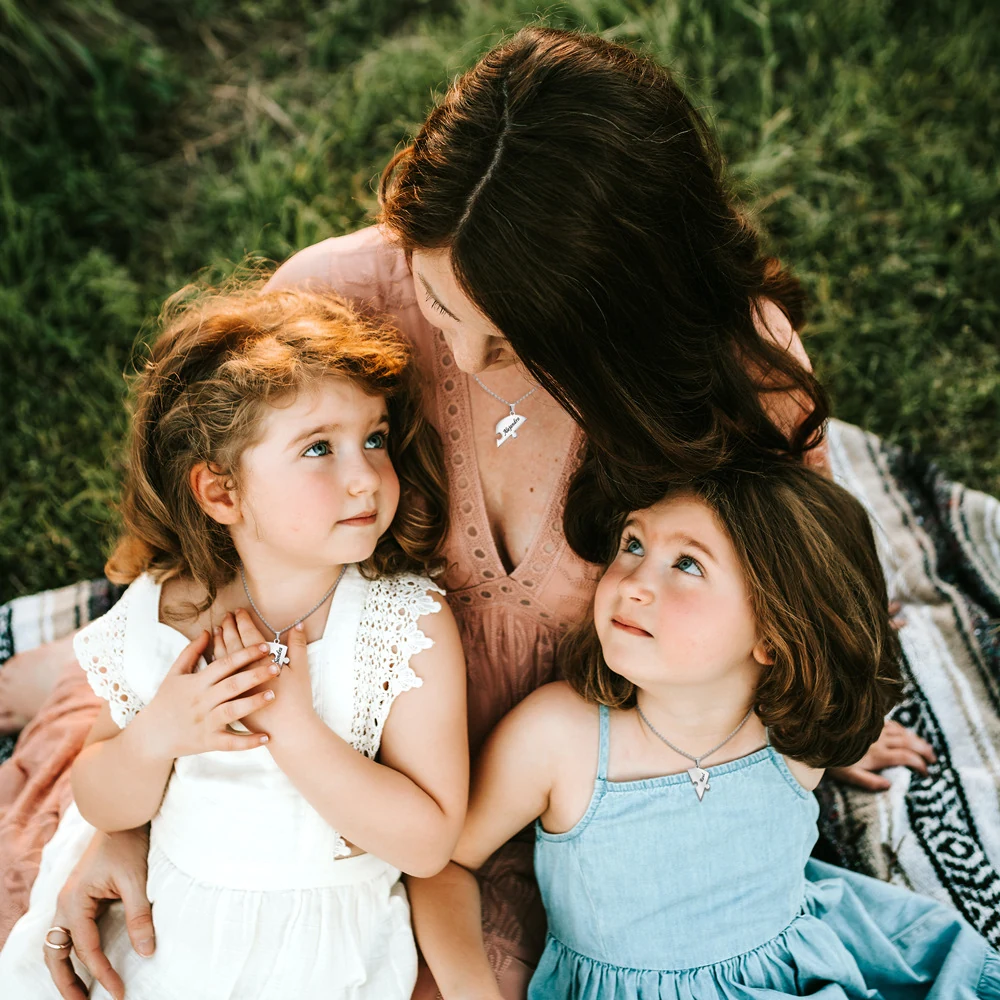
After a family reconciliation, give personalized jewelry only when a gift and its symbolism are welcome. Talk first, use each person’s current preferred name, and avoid making the object prove that the relationship is fully restored. A connected design can mark a chosen step, but it should not replace an apology, erase boundaries, or require a grateful response.
Confirm that the relationship can hold a gift
Reconnection can mean a first conversation, occasional contact, a renewed close relationship, or something still uncertain. Do not interpret one friendly exchange as permission for permanent matching jewelry.
Ask plainly: “Would a small personalized gift about our connection feel welcome, or would you prefer we keep things simple?” Give the person room to decline without explaining. If the answer is unclear, wait.
A gift should not arrive with a request for forgiveness, public display, photographs, or immediate wear. Those expectations turn the object into pressure.
Let time separate the conversation from the purchase. A warm response in the moment may still need reflection. Ask again before collecting names or selecting a symbol, especially when the piece would be shared by multiple people.
If the relationship remains fragile, a card, meal, or non-personalized gesture may be more appropriate. Choosing less permanence is not a lesser commitment; it can respect the pace both people have established.
Use current names and current boundaries
Confirm the exact name each person wants engraved now. A period of distance may include name changes, new privacy preferences, or relationships the giver does not fully know. Do not copy an old nickname automatically.
Decide who may know about the gift. One relative may welcome a private exchange but not a family announcement. Plan shipping, handoff, and any accompanying message accordingly.
The engraving guide can help with practical wording after consent is established; it cannot decide what the relationship should mean.
Confirm current names independently. A relative may have changed a surname, punctuation, or preferred form during the period apart. Do not use old mail, social profiles, or childhood labels when the person can approve the text directly.
Choose a connected format cautiously
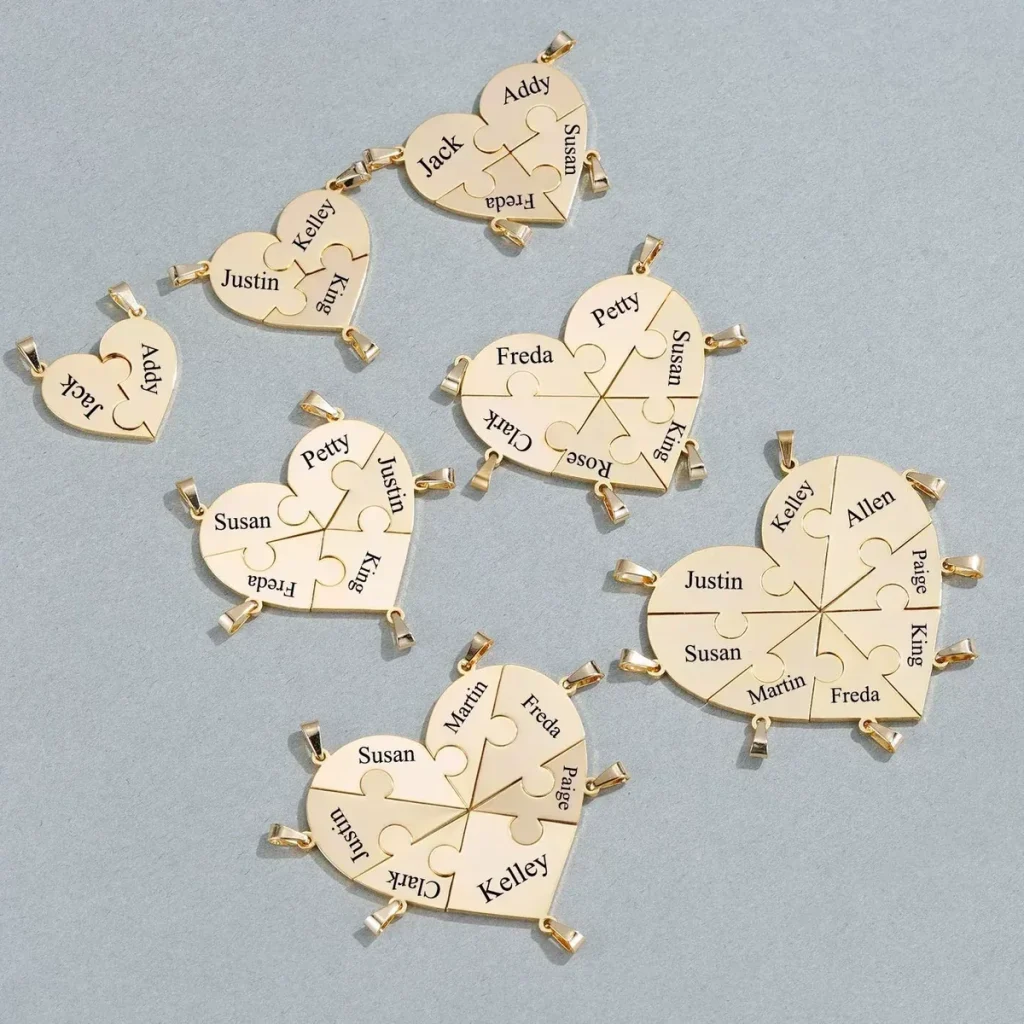
The Together Heart Puzzle Necklace supports two or three interlocking pieces, one engraved name per piece. It is a plated stainless-steel name-led design with no birthstone fields.
Its divided-heart concept can fit two or three relatives who already want to share a visible connection while wearing separate pieces. It is not appropriate when one person would feel obligated, the group has more than three wearers, or a heart symbol feels too strong.
The product offers three tones for the configuration. Do not assume mixed tones within one set or add another piece through a note.
Offer the two- or three-piece concept as an option, not a test. If one person dislikes heart shapes or necklaces, another current product—or no jewelry—may be the respectful result. Matching format should never become evidence demanded from the relationship.
Keep the accompanying message modest
Describe what is true now: appreciation for the conversation, hope to continue respectfully, or the reason you thought of the person. Avoid claiming the past is resolved, the family is “whole again,” or the recipient must carry the relationship.
Do not use an invented quotation or speak for other relatives. If three people share the set, every wearer should understand and accept the plan before ordering.
A private handoff may be more suitable than a holiday table or reunion. Let the recipients decide whether to combine the pieces for a photograph.
Keep the message free of timelines such as “back to normal” or “forever this time.” State only what both relatives currently recognize. The object should not predict future closeness or erase the work still needed.
Use a consent-to-order checkpoint
- The gift concept is welcome.
- The heart symbol and separate-piece format are welcome.
- Each display name and wearer is confirmed.
- Privacy and handoff preferences are clear.
- No reaction, photo, or wearing schedule is expected.
Only then follow the personalization process. Review the current collection if a less connected symbol or another format fits better.
Because the puzzle necklace is name-led, it does not require month information. Do not add birthstone symbolism to make the gift seem more complete. One approved name per piece is the current structure.
Common questions
Should reconciliation jewelry be a surprise?
Usually not when the relationship or symbol may feel sensitive. Ask about the concept, name, and format first; surprise is less important than consent.
Can jewelry replace an apology?
No. The gift should not be used to avoid a needed conversation or demand that the recipient accept a particular account of the past.
What if one relative does not want a piece?
Respect the decision and change or stop the plan. A connected set only works when every intended wearer freely wants it.
Let the relationship move at its own pace
Personalized jewelry can mark a step that relatives already recognize, but it cannot set the pace of reconciliation. Confirm welcome, current names, symbolism, privacy, and expectations before choosing a product. If the piece is given, let each person decide when—or whether—to wear it. The relationship remains larger than the object.
After the handoff, do not monitor wear or ask for updates about the piece. Share the current care information once, then leave ownership and use with each recipient.