Individual Birthstone Charms vs a Clustered Family Ring
Compare individual name-linked birthstone charms with a compact family ring cluster by readability, movement, fit, family count, and daily use.
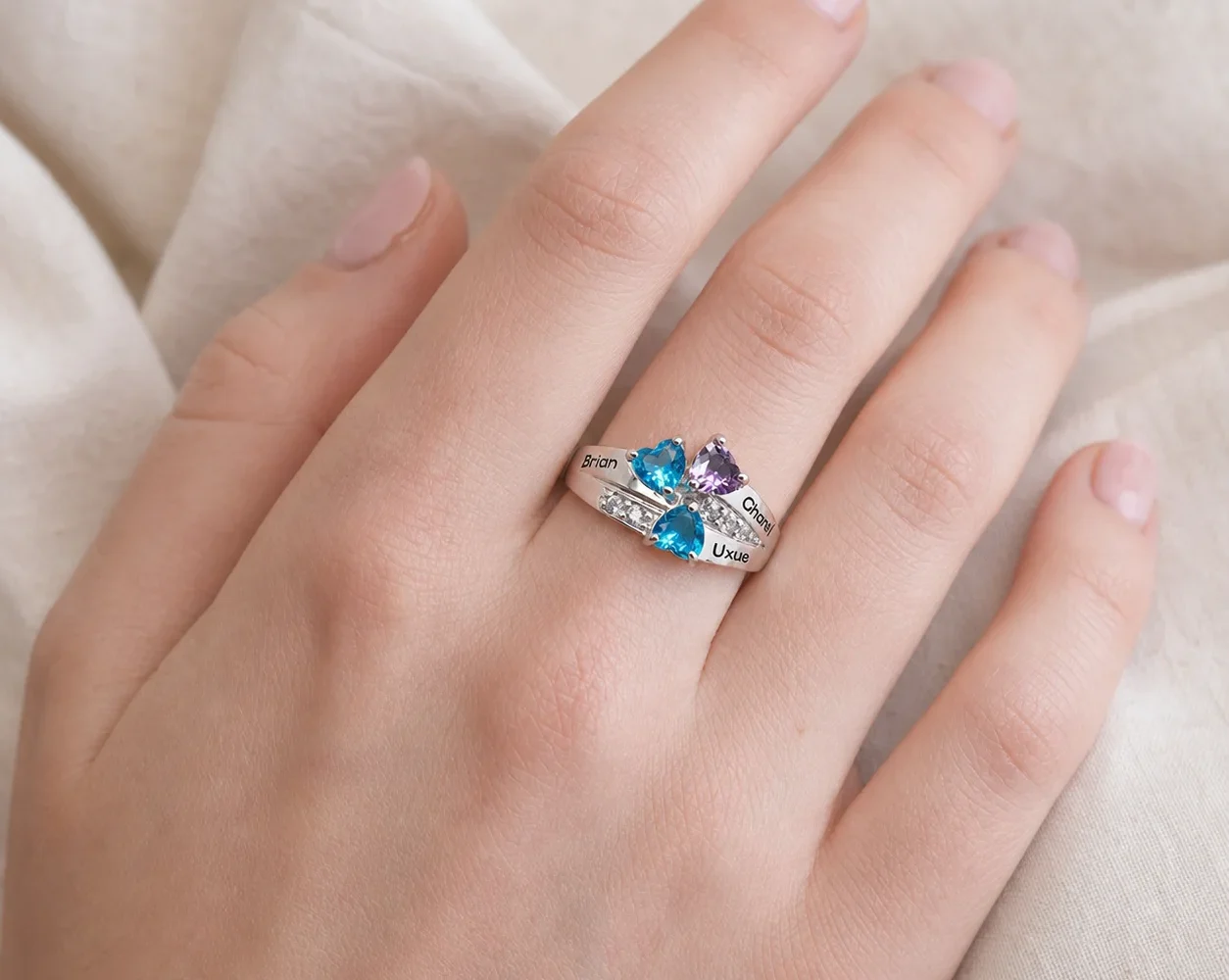
Individual versus clustered family birthstones create two different reading experiences. Separate charms give each person a distinct hanging element that can move independently and pair visibly with a name. A clustered ring gathers the family colors into one compact focal area. Choose the layout that matches the recipient’s preference for movement, readability, fit, and everyday use—not an abstract ranking of sentiment.
Understand the two visual grammars
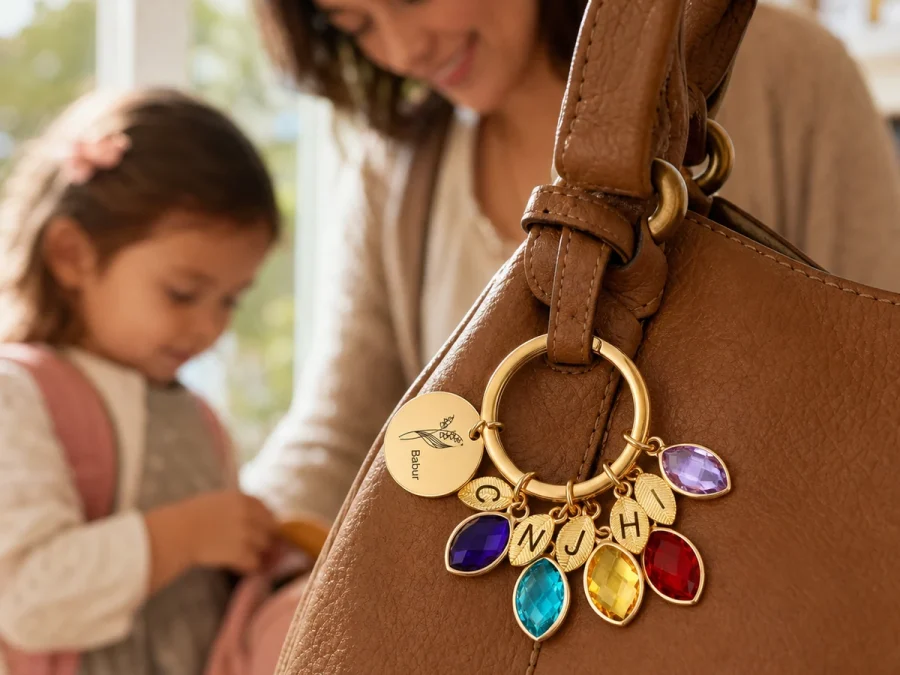
An individual charm says, “Here is one person, and here is another.” Separation makes it easier to trace each engraved element to its month-linked accent. As the wearer or keyring moves, the charms can overlap and change order temporarily, so the complete piece feels active.
A cluster says, “Here is the family as one composition.” Colors share the same compact area, and a higher count creates greater density. It may be less important to read each accent instantly from a distance; the engraving and the owner’s knowledge complete the story.
Neither layout changes the underlying birth-month tradition. Amorieva’s relevant colored details are simulated birthstones or crystal-style accents selected by month, not evidence about a named gem material.
Try describing the intended gift aloud. If you naturally name each person and point to an element, separate charms may fit that storytelling style. If you describe the family as a constellation or group, a compact cluster may express the relationship more directly.
Choose separate charms for distinct person-by-person reading
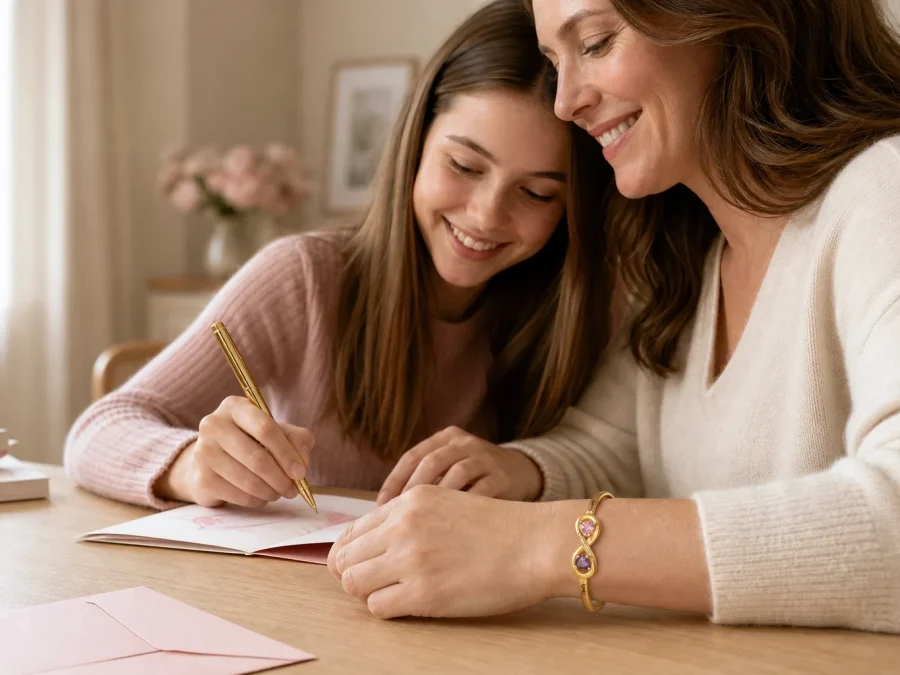
The Family Branch Birthstone Bangle supports one to five engraved leaf charms with corresponding simulated birthstone selections. It is currently available as an adjustable bangle, round keyring, or heart keyring. A central disc can carry a short message through the current note workflow.
This structure can suit a recipient who likes visible name elements, gentle movement, and the ability to identify each person separately. The format choice also helps: a keyring removes body-fit questions, while the bangle keeps the family story at the wrist.
The tradeoff is interaction among the charms. They can turn or overlap in ordinary use. If the recipient expects every name to remain aligned like text on a plaque, a moving charm structure may not match that expectation.
Choose a cluster for compact hand-centered color
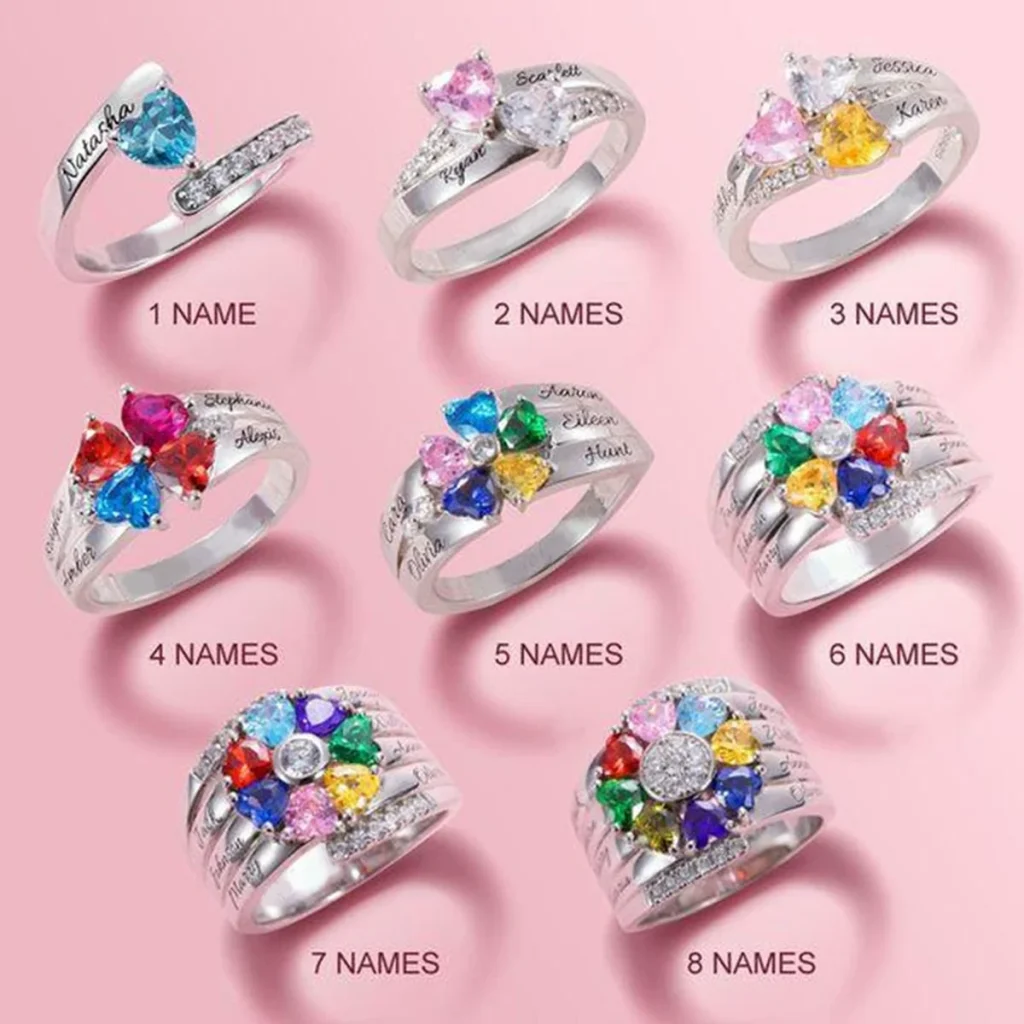
The Family Constellation Name Ring supports one to eight simulated birthstone accents with name or short engraving. It is offered in US sizes 6 through 10 and uses a plated metal design. It does not currently provide three selectable finish tones.
A ring can accommodate a larger accent count than the one-to-five Family Branch structure while keeping the visual story in one cluster. It can suit someone who already wears rings, knows the intended size, and prefers a consolidated rather than dangling layout.
The main constraint is sizing certainty. Do not choose the ring simply because its compact cluster looks convenient if the intended finger and current size are unknown. A keyring or necklace may be the more reliable gift format in that situation.
Use a decision table instead of comparing beauty
Create two columns and score these practical rows:
- Family count: one to five for the charm design; one to eight accents for the ring.
- Name visibility: separate engraved leaves versus a ring engraving paired with a cluster.
- Movement: dangling independent elements versus one fixed composition.
- Fit information: bangle judgment or no body sizing for a keyring versus a confirmed US ring size.
- Recipient habit: wrist or key use versus regular ring wear.
Review other structures in the current Amorieva collection if neither column has enough confirmed answers. A necklace may preserve the family count while changing the use format.
Proofread according to the layout
For separate charms, create a row for each leaf: position, name, and month. Check that the number of leaves, names, and selected months agrees. For the ring, verify the accent count and sequence separately from the ring size and engraving.
Amorieva’s personalization process can help you prepare both records before opening the form. Repeated birth months are valid in either layout. Do not alter one relative’s month to create more varied colors.
Photograph or save the approved worksheet for your records, not as a substitute for reviewing the live fields. The two products organize information differently, so copying an old order line by line without remapping positions can introduce an error.
Common questions
Are individual charms easier to identify?
They can make person-by-person pairing more explicit because each leaf has a name and corresponding month accent. Movement and overlap may still change what is immediately visible during wear.
Does a clustered ring support more people?
In this comparison, the ring supports one to eight simulated birthstone accents, while the Family Branch design supports one to five loved ones. Confirm the engraving and field structure as well as capacity.
Which layout needs less fit information?
The keyring version of the Family Branch design avoids body sizing. A bangle still needs fit judgment, and the Family Constellation ring requires a confirmed US size from 6 through 10.
Choose how the family should be read
Separate charms emphasize individual family members; a cluster emphasizes their shared composition. Once you decide which reading fits the recipient, capacity, sizing, and proofreading become concrete checks. The layout will then serve a clear purpose instead of winning a vague style contest.