How Should an Open Cuff Bracelet Fit Before You Order?
Use a practical fit check for an open cuff bracelet, compare a similar piece, and review personalization without treating adjustability as one-size-fits-all.
An open cuff bracelet should rest in a stable, comfortable position without pinching, sliding freely over the hand, or demanding repeated forceful bending. Because wrists and wearing preferences differ, “adjustable” is not the same as universally sized. The most useful pre-order check is to compare the recipient’s wrist and favorite bracelet with the listed structure of the cuff being considered.
Define comfortable and secure in observable terms
A practical fit lets the wearer move the wrist normally while the bracelet remains where they expect it to sit. It should not press sharply into the skin at the open ends. It also should not feel so loose that ordinary arm movement makes it rotate constantly or approach the widest part of the hand.
Preference matters. Some people like a cuff close to the wrist; others want a little movement. Ask the recipient how their existing bracelet feels rather than relying on a generic “small,” “medium,” or “large” label. If the gift must remain a surprise, borrow a cuff they already use only with permission from someone who can return it unnoticed and safely.
Measure a comparable bracelet, not just the wrist
A soft measuring tape around the intended wearing position gives useful context, but a comparable open cuff provides better information about the shape and opening the recipient accepts. Lay that bracelet on a flat surface and record its approximate inner width, opening, and band width. Do not reshape it for the sake of measuring.
Then compare those observations with the current product description and images. Product photographs can explain form, but they cannot promise an identical position on every wrist. Avoid estimating fit from the model image alone, especially when the image is enlarged or cropped.
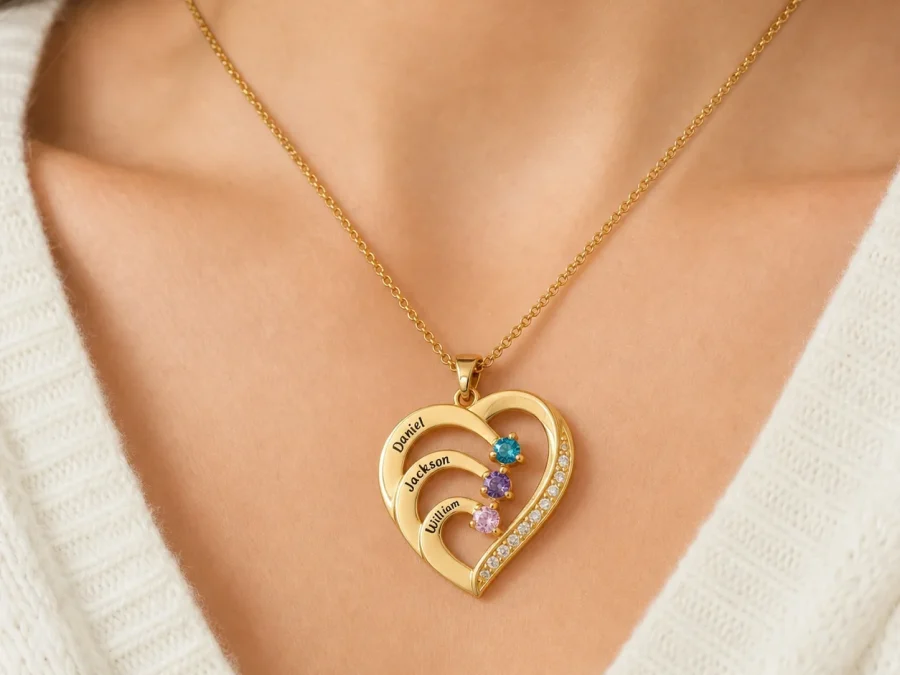
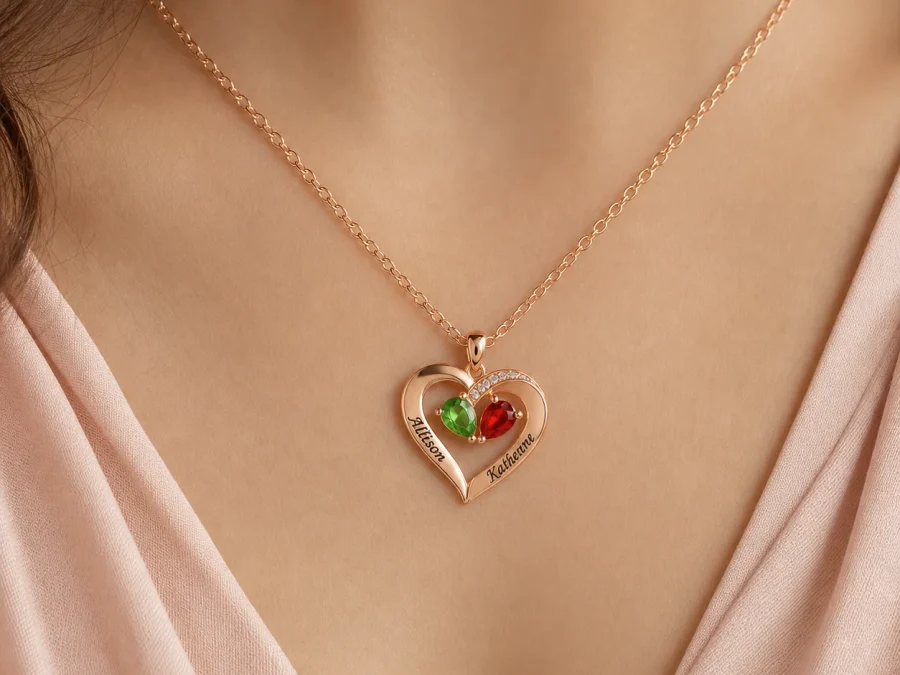
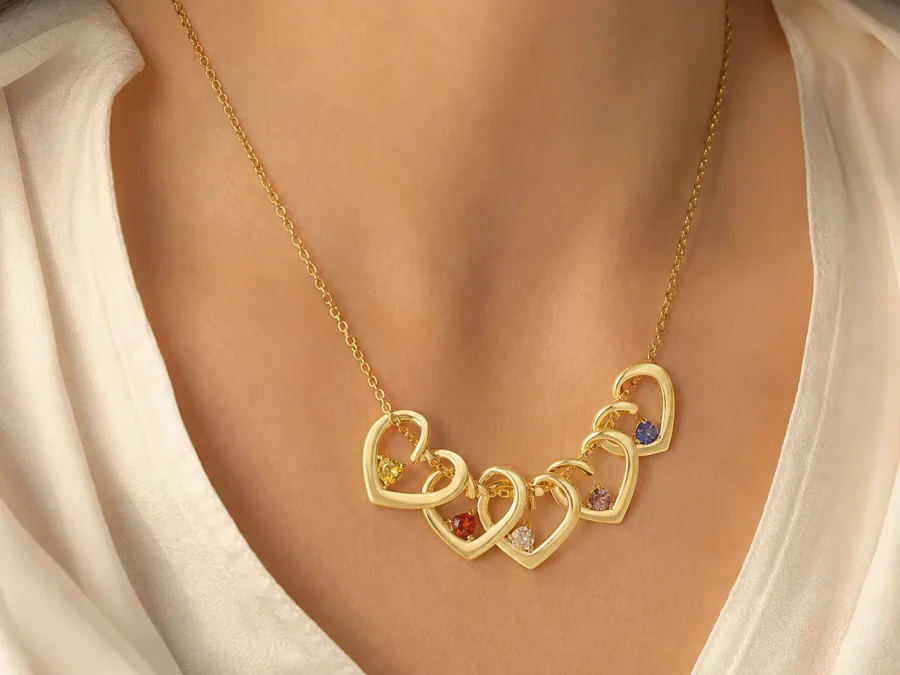
If you are comparing several formats, the current Amorieva jewelry selection includes necklaces, a ring, wrist pieces, and a keyring-capable design. A non-wrist format may be a better gift when reliable cuff information is unavailable.
Apply the check to the open heart cuff
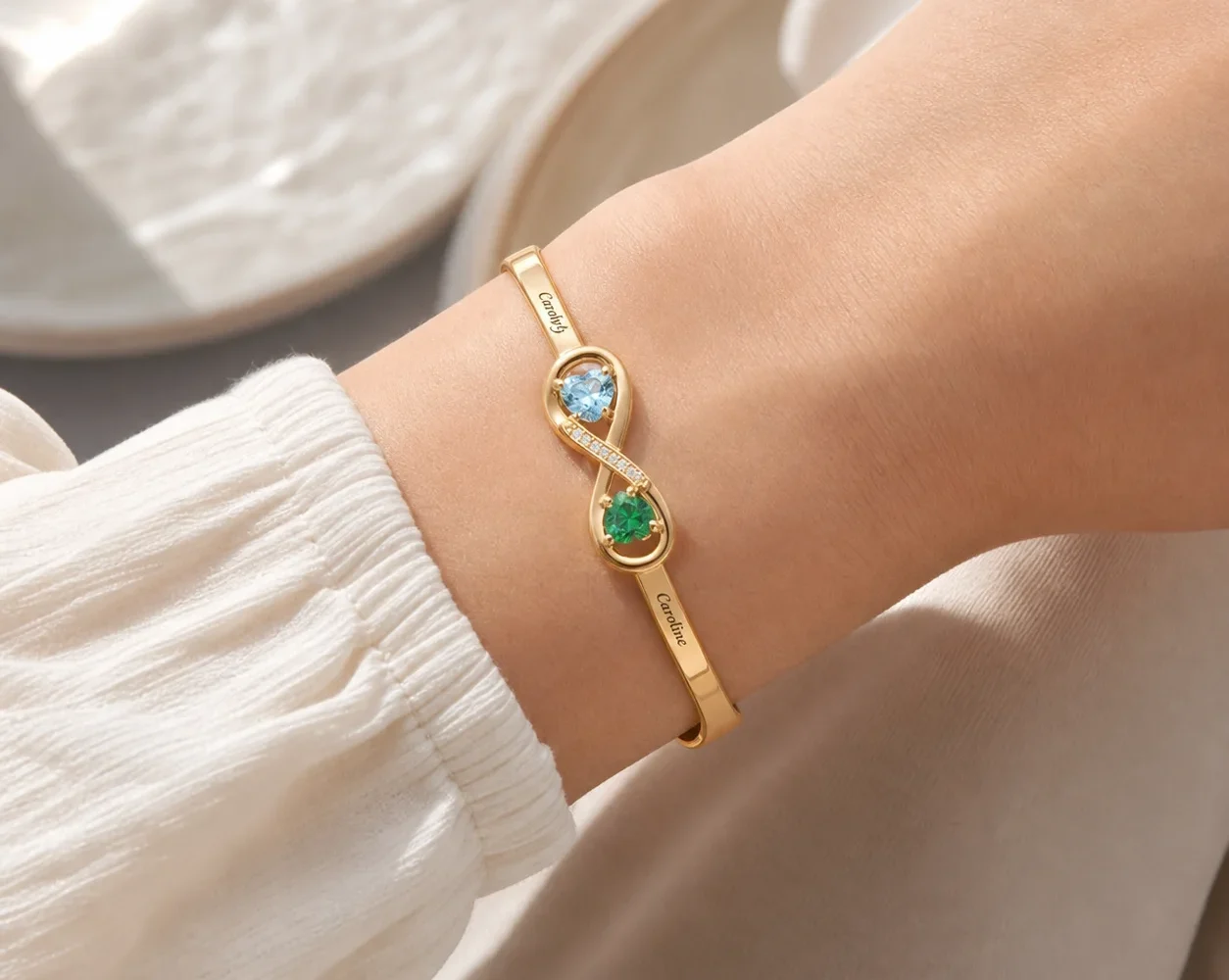
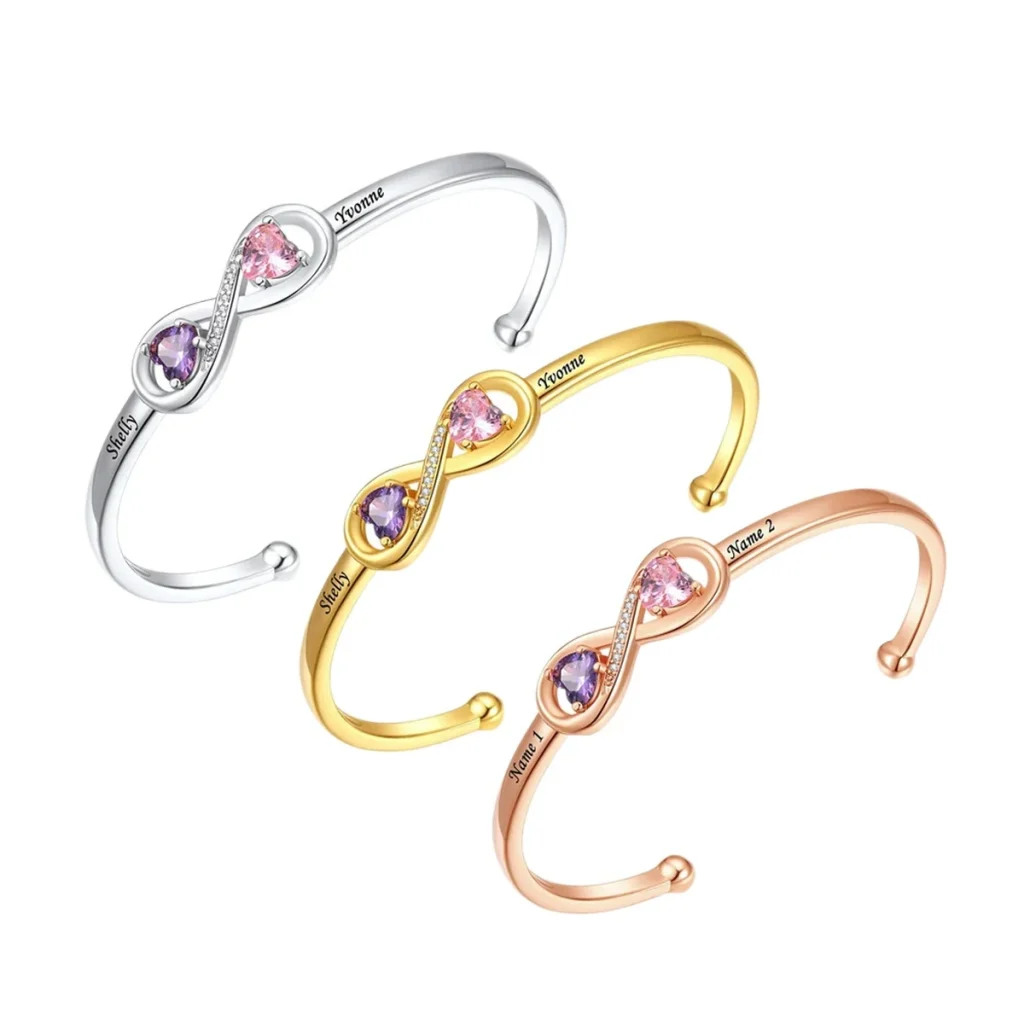
The Open Heart Birthstone Cuff is a plated copper-base design with an open, adjustable structure. Its current product information records a center width of about 26.1 mm and a band width of about 3 mm. Those dimensions describe the design; they do not establish how it will fit every wrist.
The cuff is specifically personalized for two loved ones through two engraved names and two simulated birthstone selections. It also offers three finish tones. Fit and personalization should be reviewed as separate decisions: first decide whether the open-cuff structure suits the wearer, then confirm the two people, two months, name order, and tone.
Adjust the piece only as the current care or product instructions allow. Repeatedly opening and closing a plated cuff can place unnecessary stress on its structure and finish. The goal is a considered initial fit, not a daily cycle of wide bending.
Run a pre-order fit and use checklist
- Confirm that the recipient already enjoys cuffs or open-ended bracelets.
- Note where they wear a cuff and whether they prefer close or mobile placement.
- Measure a comparable piece without changing its shape.
- Review the listed dimensions and images as product information, not a fit guarantee.
- Check whether two-name personalization matches the intended family story.
- Ask Amorieva a product-specific question before ordering if the comparison remains unclear.
The Amorieva FAQ can answer general personalization and material questions, while the product page should remain the source for current fields. Do not compensate for uncertain fit by assuming the cuff can be bent indefinitely.
Plan for wear and care together
A well-fitting cuff still needs a sensible routine. Put it on and remove it without dragging engraved or plated areas against hard surfaces. Keep the piece dry, and remove it before showering, swimming, exercise, saltwater, or chlorinated water. Apply perfume or lotion before wearing the cuff and allow those products to dry.
After wear, wipe gently with a soft lint-free cloth and store the cuff separately so its personalized ends do not rub against other jewelry. The complete plated jewelry care guide gives a more durable reference than improvised cleaning methods.
Common questions
Should an open cuff leave a mark?
A cuff should not create sharp pressure or persistent discomfort during normal wear. Temporary impressions can have many causes, so stop wearing it if it pinches or hurts and seek product-specific fit help rather than forcing the opening wider.
Does adjustable mean it will fit any wrist?
No. Adjustability offers some flexibility, but the cuff still has a defined structure and range. Compare it with a known comfortable bracelet and use the current dimensions before deciding that the format is suitable.
Can I bend an open cuff every time I wear it?
Avoid making repeated wide bends part of the daily routine. Use gentle handling consistent with the current product instructions, and aim for a stable fit that does not require aggressive reshaping for each wear.
Choose the format only after the fit check
An open cuff can be a thoughtful two-person design when the recipient already likes this bracelet style and the comparison supports a comfortable fit. A few measured observations are more useful than a one-size assumption. Pair that fit judgment with accurate names and months, and the practical choice will support rather than compete with the personalization.