Blended-Family Jewelry Buying Guide: Include Every Name With Care
Choose blended-family jewelry by agreeing on the complete name list, then checking birthstone needs, wearer count, and current product capacity.
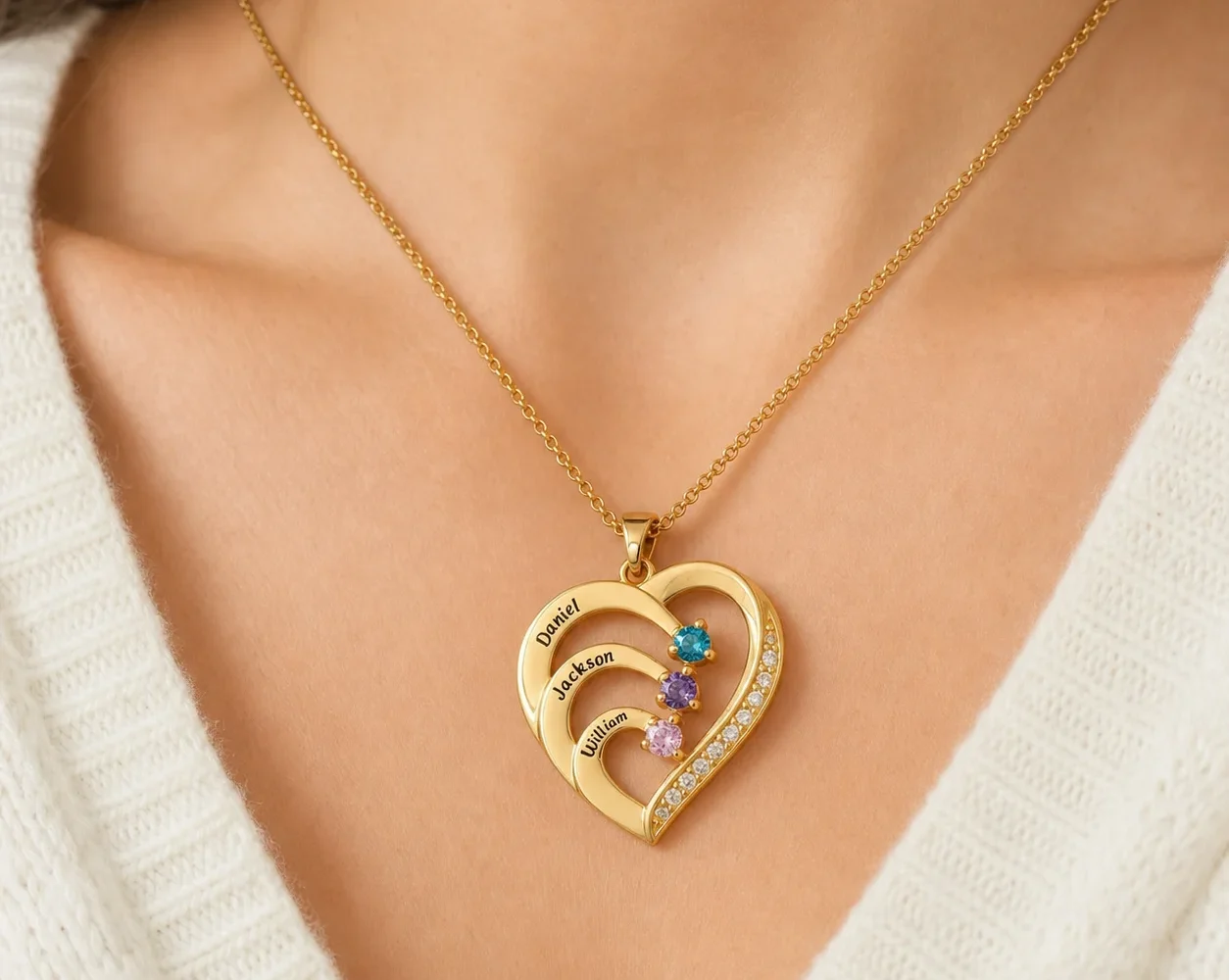
Choose personalized jewelry for a blended family by confirming the complete name list first, then counting names, deciding whether birth-month accents matter, and identifying who will wear the result. For one wearer, current Amorieva designs offer either one to six name-and-month pairs or one to eight name-only beads. If the full agreed list does not fit, do not omit someone or rely on a note to expand the product.
Define the circle before choosing a product
“Blended family” can describe many arrangements: children across two households, stepparents, half-siblings, adult children, or relatives who use different surnames. A generic template cannot decide which people belong on a specific gift. Ask the giver and, when appropriate, the recipient or family members most affected.
Write one sentence that sets the boundary, such as “all children in the current household” or “the recipient and every child she considers part of this family.” The wording is a planning tool, not an engraving suggestion. Apply the same definition to the entire list.
A surprise may limit direct questions, but it does not justify guessing about an emotionally significant name. A discreet check with a trusted family member is safer than turning an uncertain relationship into permanent text.
Give included names the same visual status
Equal treatment does not require everyone to have the same relationship title. It means the chosen design uses the same type of element—such as one engraved band and one month accent—for each person. Avoid putting one group in names and another only in a hidden note if the gift is meant to express equal inclusion.
First names often keep the layout clear without announcing roles such as “step,” “half,” or “biological.” Use a role label only if the person genuinely prefers it and the current engraving field can carry it legibly. The guide to meaningful necklace engraving can help you edit the text without inventing unsupported capacity.
If two people share a name, use agreed forms such as a full first name and familiar short form when appropriate. Do not add initials or dates without confirming that the recipients will recognize and welcome the distinction.
Choose an order that can be explained kindly
Birth order is usually easy to verify. A generation-based order can work for a piece that includes parents and children. Alphabetical order may remove hierarchy when family chronology is complicated. No system is universally correct; the useful test is whether the family can describe it without saying one relationship matters more.
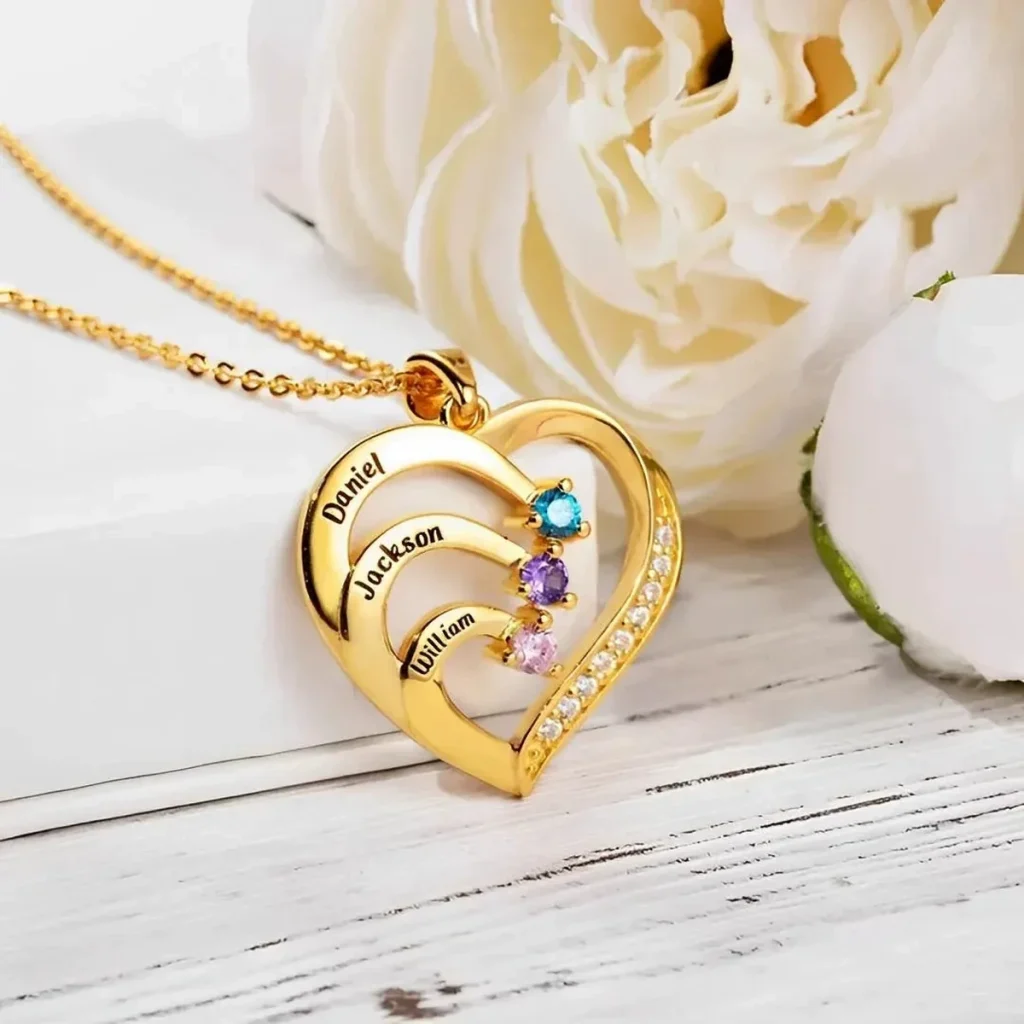
Keep the name and birth month together as one row throughout the process. If the list is reordered, move both fields at once. Shared months can repeat. The goal is an accurate person-to-month match, not an alternating color sequence.
The existing guide to planning the number of necklace names can help you consider capacity and readability after the inclusion decision is settled.
Choose between name-and-month pairs and name-only beads
Use the required personalization fields as the purchase filter before comparing tone or decoration:
- One to six names with month accents: the Family Embrace Heart Necklace pairs each name with a simulated birthstone selection and offers three tones.
- One to eight names without month accents: the Gathered Hearts Name Necklace uses engraved name beads, with petite and classic pendant configurations, but no birthstone-month field.
- More than eight names: neither of these current necklaces holds the complete list. Do not omit a person or request unsupported extras through a note.
Capacity for the current order is not a promise that names can be added to the same finished piece later. Choose a layout that represents the family accurately now; a later family change may require a new arrangement.
Review the gift for consent and accuracy
Before submitting, read the list from the recipient’s point of view. Are all spellings current? Does anyone use a chosen name rather than a legal name? Would the order feel understandable? Has a recent family change made an old roster inaccurate?
Then conduct a technical check: selected count, name order, matching month order, tone, and every required field. The Amorieva ordering process can guide that review. A general Special Note should not conflict with the required selectors, and a separate digital proof is not promised.
Common questions
Should I label stepchildren differently?
Not by default. If the gift is about one family unit, consistent first-name treatment often communicates belonging more clearly. Use role labels only when they are wanted and meaningful to the people represented.
What if one family member does not want to be included?
Respect that choice. Personalized jewelry should not override someone’s boundary. Revisit the purpose of the gift and select a roster or format that everyone affected can accept.
How do I handle more names than the necklace supports?
Choose a current design with sufficient capacity or a different gift structure. Do not rely on a note to expand the Family Embrace limit beyond six names and birthstone selections.
Represent belonging without ranking it
A blended-family piece becomes inclusive through the decisions behind it: an agreed circle, consistent name treatment, a respectful order, and a product that can hold everyone intended. Confirm those human choices before tone or decoration. The finished jewelry can then reflect a family as it defines itself, without turning its varied relationships into a hierarchy.