Long-Distance Family Jewelry: One Necklace or Separate Pieces?
Choose long-distance family jewelry by deciding who will wear it, then compare piece count, engraving fields, tone, and the handoff plan.
Choose personalized jewelry for a long-distance family by deciding first whether one person or several people will wear it. A grouped necklace is the better fit when one recipient should carry several family names; a divided design fits only when two or three willing necklace wearers each want one part. Verify wearer count, engraving, tone, and the handoff plan before ordering.
Choose one shared necklace or separate wearable pieces
A single necklace with many family names can remind one person of relatives who live elsewhere. A divided necklace serves a different purpose: multiple people each keep part of the same visual design. Neither format is inherently more connected. The right one depends on who is meant to wear the jewelry after the gift moment.
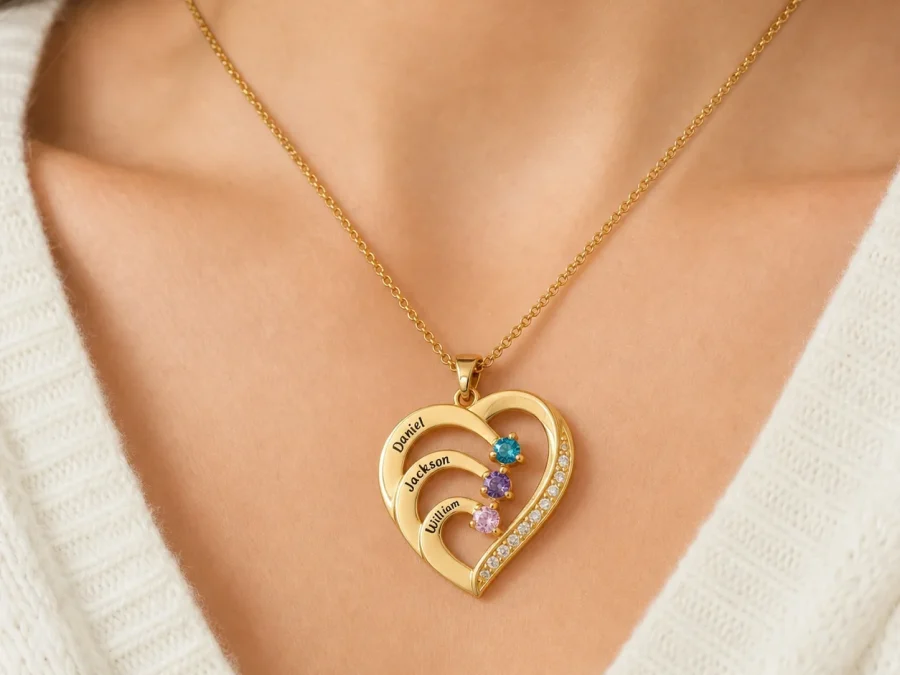
Use wearer count as the first purchase filter. If one person will wear the family names, the Family Embrace Heart Necklace supports one to six names paired with simulated birthstone selections. If two or three people each want part of one connected design, the Together Heart Puzzle Necklace supports two or three interlocking pieces, one engraved name per piece, and no birthstone field. Four or more intended wearers need a different gift structure; do not remove someone simply to fit a three-piece limit.
Ask privately whether everyone uses necklaces. A shared object should not become an obligation. A relative who does not wear jewelry may still appreciate the family idea without needing to receive one of the pieces.
Understand the interlocking format accurately
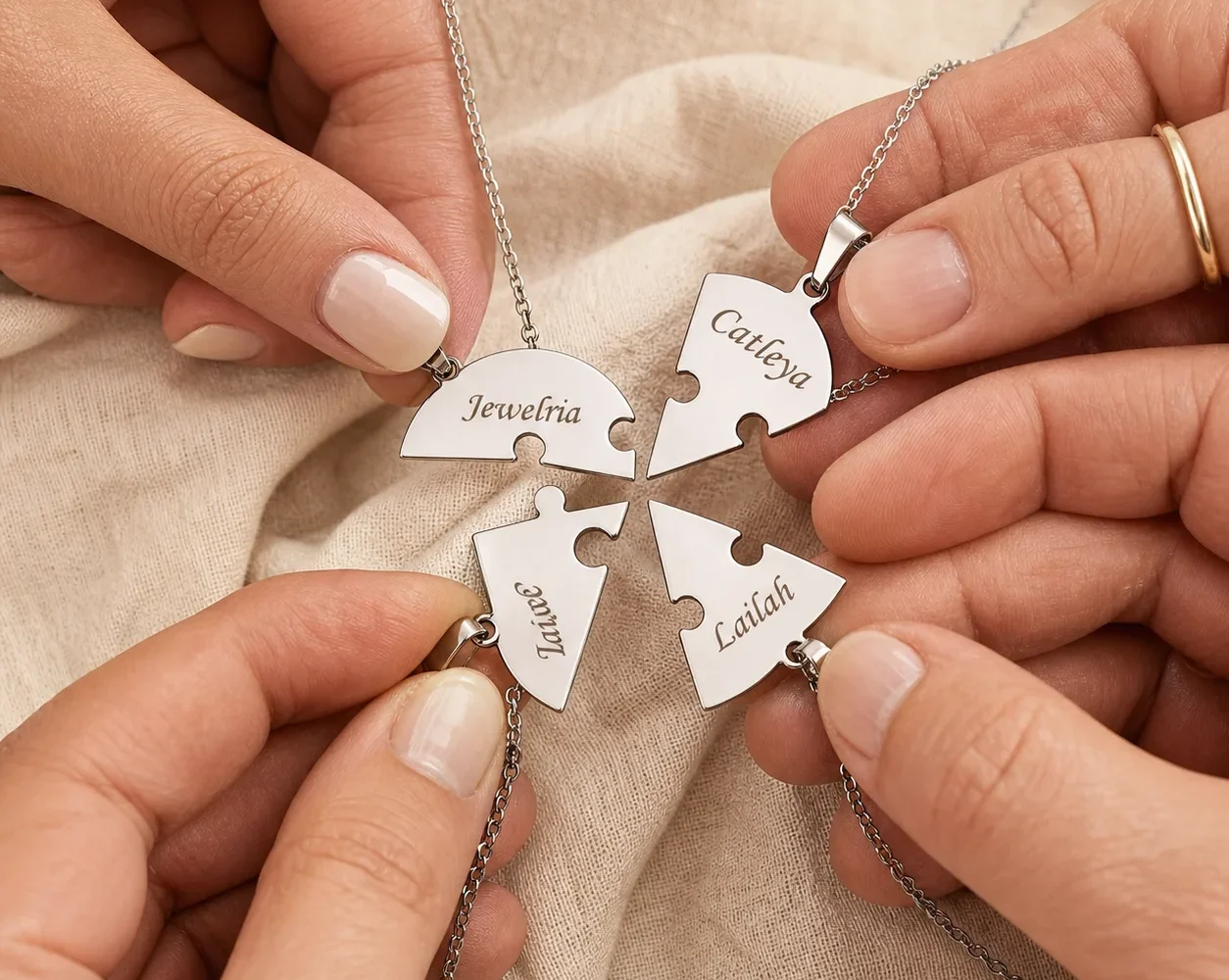
The current Together Heart Puzzle Necklace is a plated stainless-steel design with two or three interlocking heart pieces. Each piece supports one engraved name. When brought together, the pieces form the shared heart concept; in daily life, each section can be worn separately.
The product currently offers gold, stainless-steel, and rose-gold tone choices, but it does not include birthstone selections. Treat it as a name-led design. If the family wants every piece associated with a birth month, another format is needed rather than an unsupported request in a note.
Choose the piece count from the number of intended wearers, not from which outline looks most balanced in a photo. A two-person relationship belongs in the two-piece configuration. A three-person relationship can use the three-piece configuration. Each piece has one name, so longer phrases or multiple names per section should not be assumed to fit.
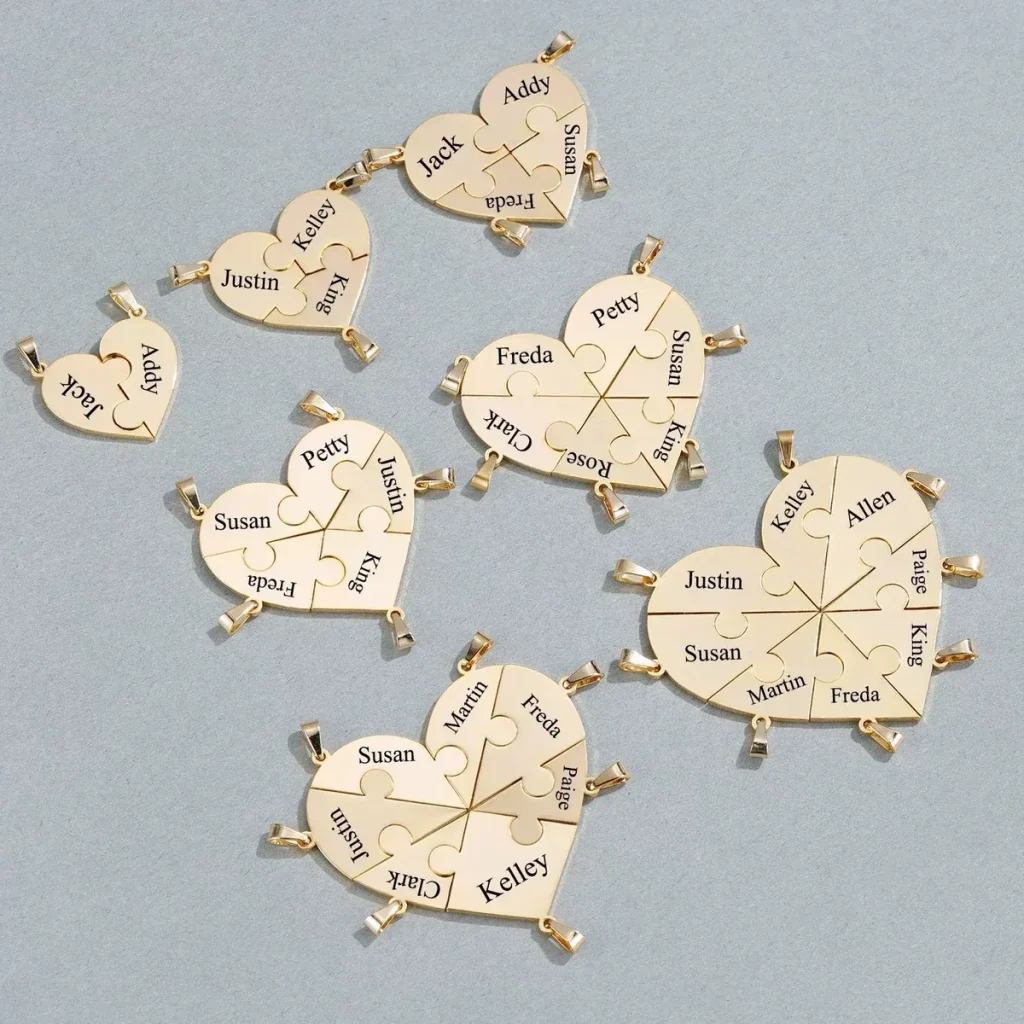
Complete the order decision and handoff map
Confirm these details before entering the personalization:
- Wearer count: two or three people who actually use necklaces.
- Set choice: the two-piece or three-piece configuration.
- Engraving: one exact, verified name for each piece.
- Tone: the selected tone for the set.
- Handoff: who receives the order and how each piece reaches its wearer.
The city is a planning cue, not engraving text. It helps the organizer see that the gift crosses households and prevents a piece from being handed to the wrong person. Keep unnecessary personal data out of the product fields.
Some families prefer each person to wear her own name. Others intentionally exchange names so each relative carries someone else. Either can work if every participant understands the choice. Record both the engraving and wearer instead of assuming they are the same.
Coordinate timing without making delivery promises
Decide whether one organizer will receive the set and redistribute the pieces or whether another purchasing arrangement is needed. Do not assume one order will be split across addresses. Amorieva currently sells and ships to United States addresses, and the live shipping and returns page should be checked for current timing and policy details before the occasion is planned.
If the family wants to open the pieces together on a video call, build flexibility into the date. A delivery estimate is not a guarantee. The connection can also be introduced asynchronously: each person receives a private note explaining how her section relates to the complete heart.
Once the assignments are final, follow the personalization process and check names character by character. A separate digital proof is not promised, so resolve uncertainty before submitting the details.
Common questions
Can more than three relatives receive puzzle pieces?
Not from one current Together Heart Puzzle Necklace configuration. It supports two or three pieces, one name per piece. A larger family should choose a different shared structure rather than assume extra pieces can be added.
Does each person need to wear the same tone?
The product offers a tone choice for the set; do not assume mixed tones within one configuration unless the current form specifically provides that option. The recipients can still wear their pieces with different clothing and other jewelry.
How should the pieces be cared for in different homes?
Give every wearer the same basic care information: keep the plated piece dry, remove it for showering, swimming, and exercise, avoid perfume and household chemicals, wipe gently, and store it separately. The full care guide is easy to share.
Keep the bond shared and the wearing personal
A long-distance family gift does not need everyone to dress alike or wear the necklace on the same day. Its strength is the clear connection between independently used pieces. Confirm that there are two or three willing wearers, map one name to each heart, choose the set configuration, and organize the handoff. The completed heart supplies the shared symbol; each relative decides how it lives in her own routine.