How to Read Necklace Dimensions Before You Buy
Learn what chain, pendant, and extender measurements actually describe, then compare those numbers with a necklace and clothing you already know.
To read necklace dimensions correctly, separate the chain length from the pendant size and any extender range. These numbers answer different questions: where the chain may sit, how much visual space the pendant occupies, and whether the length has an adjustable interval. The most reliable check is to compare each measurement with a necklace and pendant you already know, because a product photo alone cannot predict placement on every body.
Identify what each number measures
A necklace listing may place several dimensions close together. Begin by labeling them rather than treating them as one overall size:
- Chain length describes the chain from end to end when laid straight, subject to the listing’s stated measuring method.
- Extender length is an additional adjustable section only when the product information specifically lists one.
- Pendant height and width describe the central decorative element, not where it will sit on the chest.
- Charm or name-element size may be listed separately from the main pendant.
Do not add pendant height to chain length to predict the necklace’s full worn drop. A chain curves around the neck, while the pendant hangs from a point on that curve. Neck circumference, body shape, clothing, and the connector all affect the final position.
Convert units without creating false precision
Many jewelry listings use centimeters for chains and millimeters for pendants. For a quick conversion, one inch equals 2.54 centimeters, and 10 millimeters equals one centimeter. A 45 cm chain is therefore about 17.7 inches. A 17 mm pendant dimension is about 0.67 inch.
Round the result for visualization. Converting 45 cm into a long string of decimal places does not make a fit prediction more accurate. The original listed measurement remains the product fact; the rounded inch value is simply a tool for comparing it with a ruler or a familiar necklace.
If a listing provides a range such as a base chain plus an extender, test both endpoints. If no extender is stated, do not assume one is included because a similar-looking necklace has one.
Use a current Amorieva example
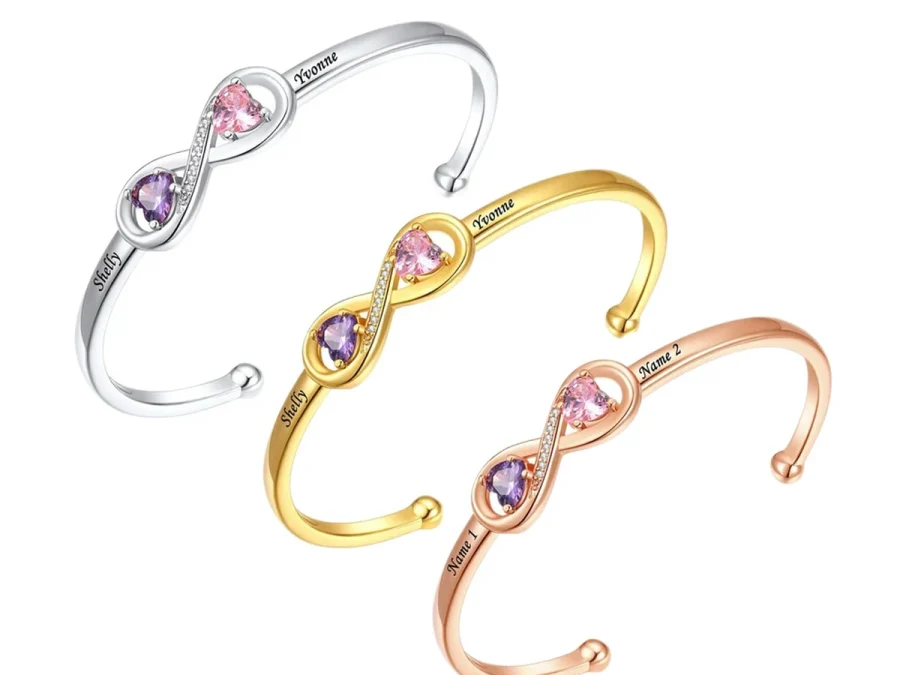
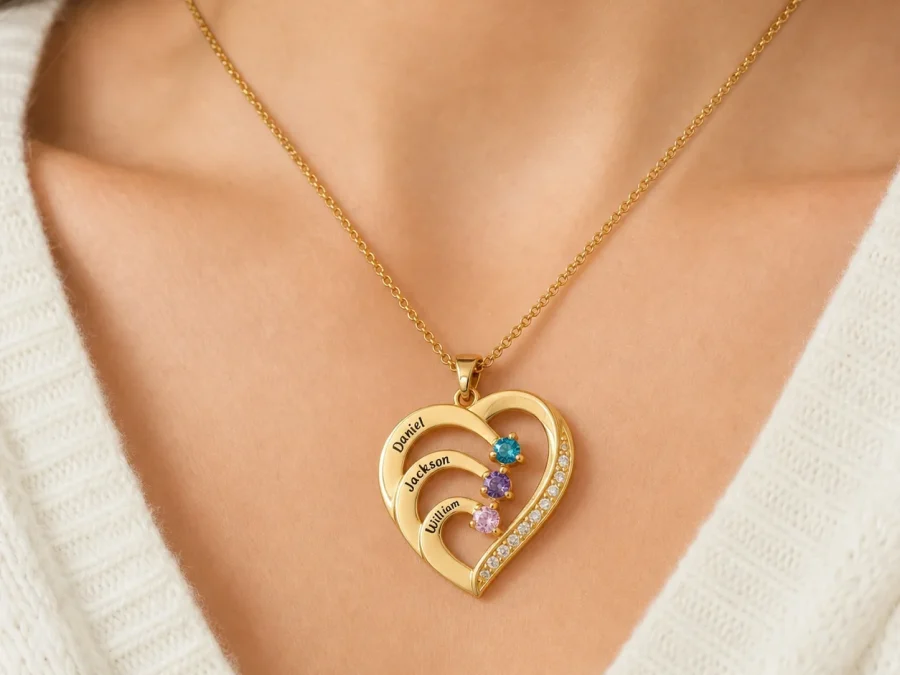
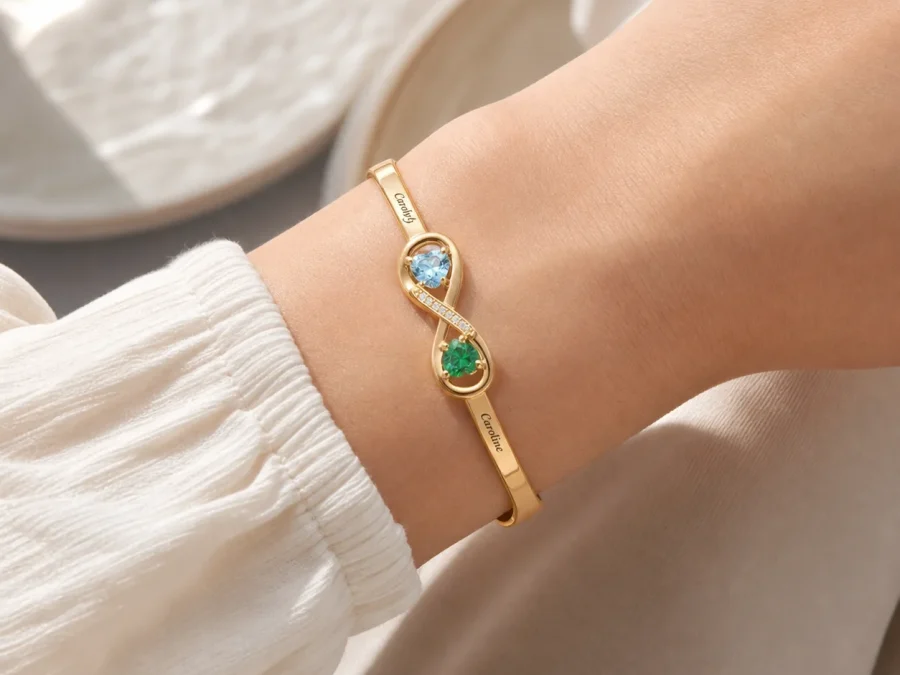
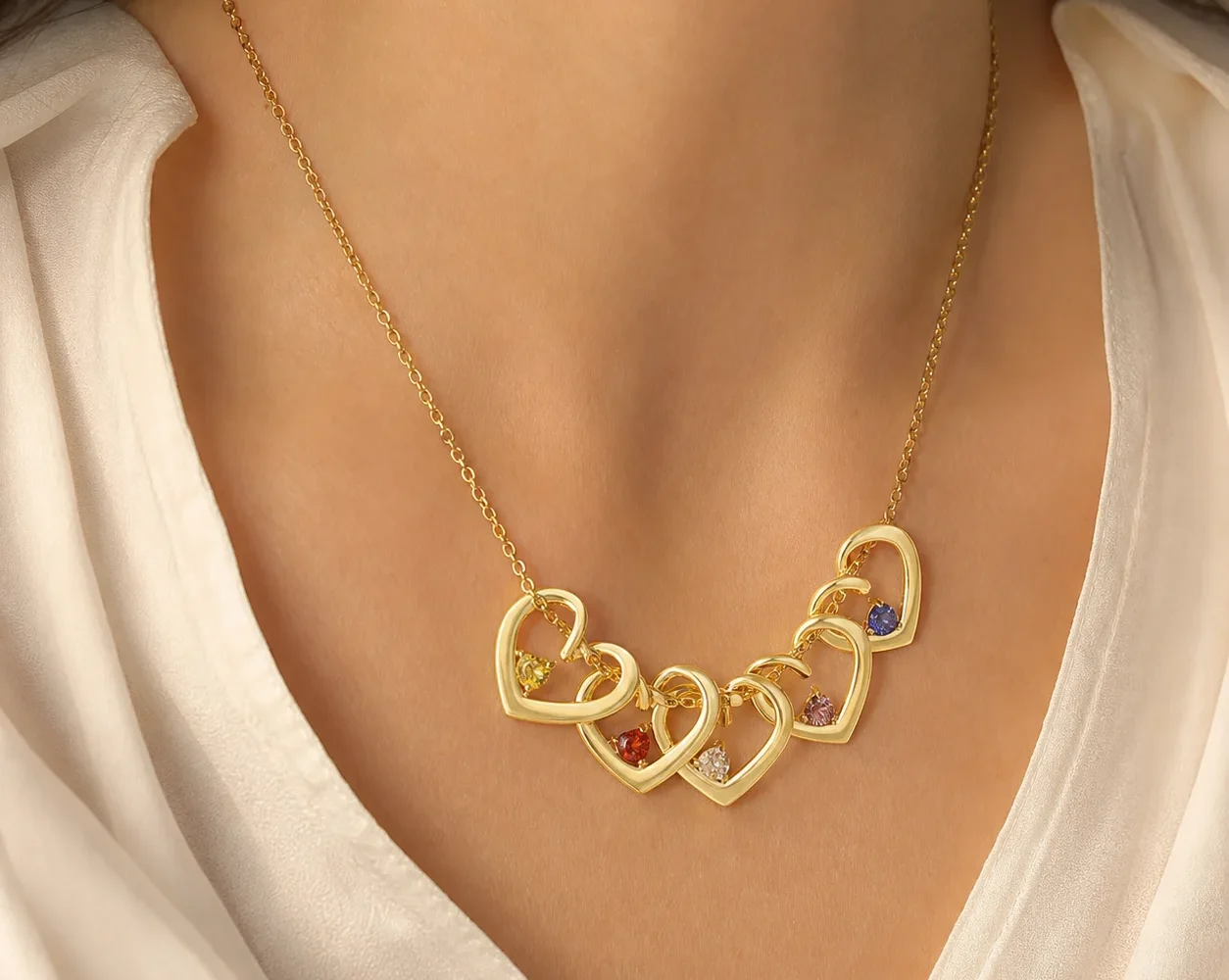
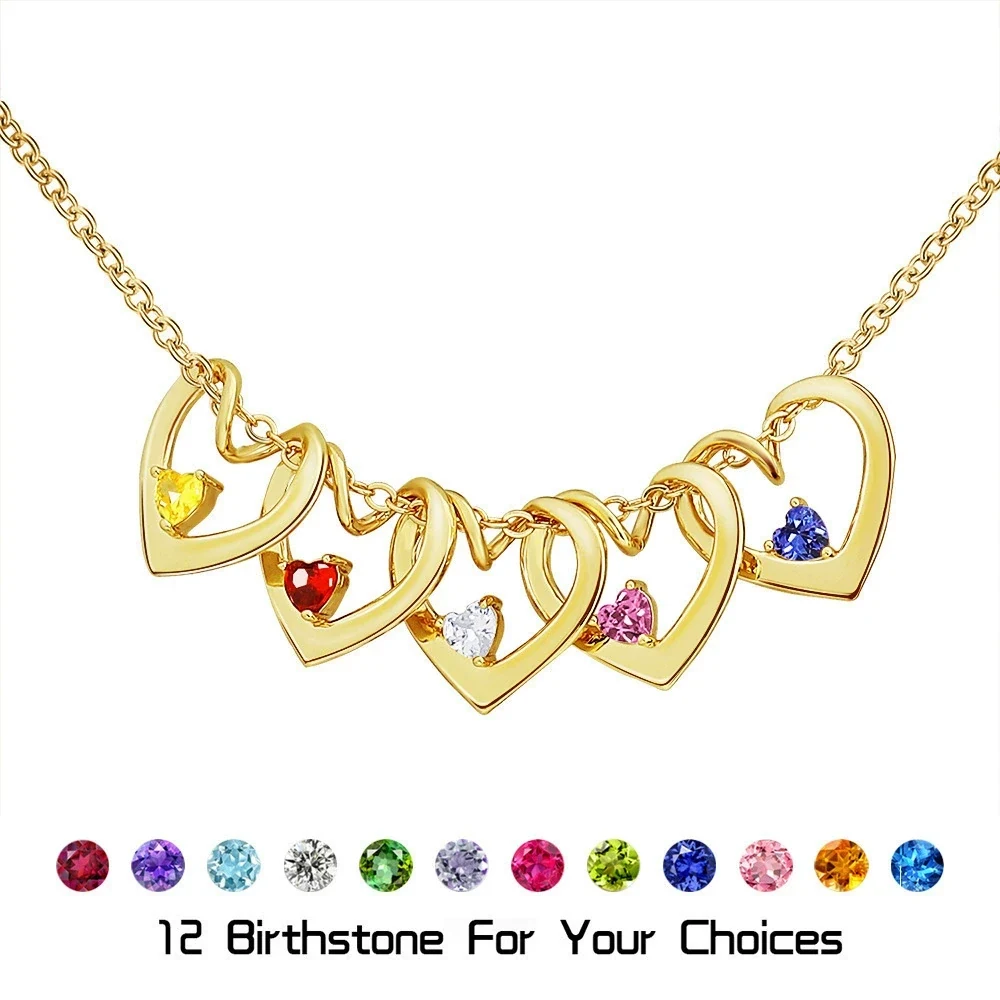
The Twisted Heart Birthstone Necklace provides a useful scale exercise. Its current necklace information records a chain of approximately 45 cm and a heart element of about 17 by 15.5 mm. It can represent one to five loved ones with engraved names and simulated birthstone selections, and the design is also offered in a bracelet format.
Read those facts in layers. The 45 cm number helps you find a chain of similar length. The roughly 17 by 15.5 mm heart tells you about the central visual footprint. The one-to-five-person capacity explains how much personalized information the structure is designed to hold. None of those measurements alone tells you exactly where the piece will land on a particular wearer.
The model image can provide general context, but it is not a body-specific fitting chart. Use it together with listed measurements, not in place of them.
Build an at-home scale check
Choose a necklace that the intended wearer already likes. Lay it flat without pulling the chain under tension, note its known or measured length, and compare that number with the listing. Then mark the listed pendant height and width on a small piece of plain paper. Hold the paper near the familiar pendant, or place both on a shirt laid flat, to compare visual presence.
This method is not a promise of exact placement, but it turns abstract numbers into a more useful reference. It also helps separate two common reactions: “the chain seems shorter than expected” and “the pendant seems more noticeable than expected.” Those are different fit questions.
Repeat the comparison over the type of neckline she normally wears. A collar, crew neck, and open neckline can frame the same necklace differently even though none changes its listed measurements.
Before ordering, check the current selectors as well. Necklace or bracelet format, number of loved ones, name spelling, month choices, and tone all affect the actual configuration. The overview of how Amorieva personalization works can help you prepare those details in a consistent order.
Common questions
Does a 45 cm chain fit everyone the same way?
No. The numerical chain length stays the same, but its worn position varies with neck size, body shape, clothing, and layering. Compare it with a chain the recipient already wears rather than relying on a universal placement label.
Should I judge pendant size from a close-up photo?
Use close-ups to inspect structure and personalization areas, not to infer life-size scale. A detail image may enlarge a small pendant so the engraving can be seen. Listed measurements and a model-scale view answer different parts of the question.
What if the measurement I need is not listed?
Do not estimate it from pixels or assume it matches another product. Review the Amorieva FAQ and ask for clarification before placing a personalized order if the missing dimension would determine whether the piece works.
Turn measurements into a real comparison
Necklace dimensions become useful when each number is connected to a physical reference. Label the chain, extender, and pendant measurements; make only sensible rounded conversions; compare them with jewelry already worn; and verify the selected format. That sequence cannot guarantee an identical fit on every person, but it replaces photo-based guesswork with a clear, repeatable scale check.