How to Measure Ring Size at Home Before Ordering a Personalized Ring
Two practical ways to measure ring size at home, an approximate US size chart, and the checks to make before ordering a personalized ring.
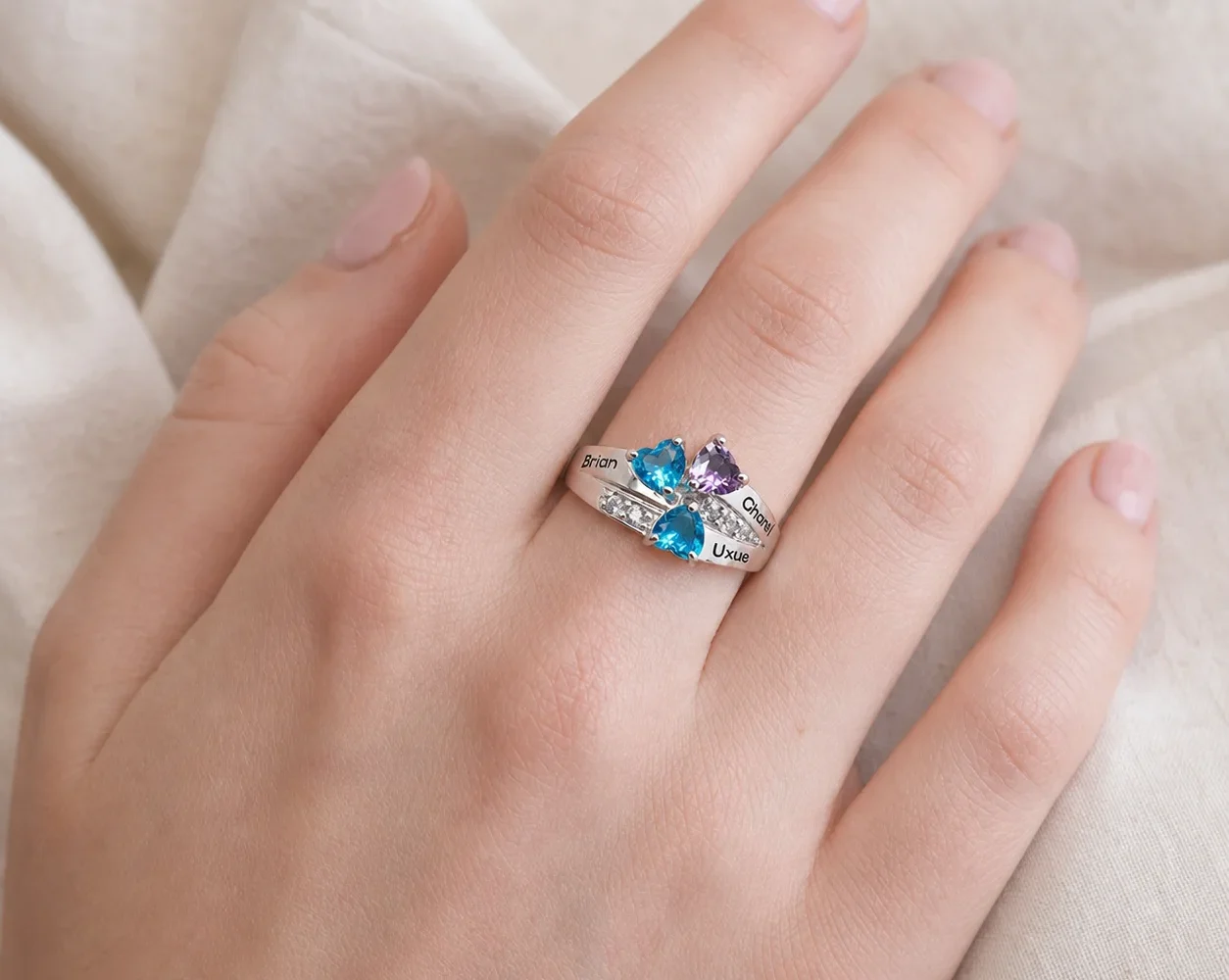
Learning how to measure ring size at home is useful when you cannot visit a jeweler, but a careful measurement matters even more for a personalized ring. Names and birthstones are prepared for one chosen configuration, so size should be confirmed before the order is placed rather than treated as a detail to solve later.
The most reliable home method uses a ring that already fits the intended finger. A paper-strip measurement can be a helpful backup. Whichever method you use, measure more than once and compare the result with the exact size chart on the product page.
First decide which finger will wear the ring
Ring size can differ between the left and right hand, and neighboring fingers are not interchangeable. Decide on the hand and finger before measuring. If the ring is a gift, do not assume the recipient’s ring finger is the same size as her middle finger or that a ring worn on the opposite hand will match exactly.
Also consider how the person likes a ring to feel. Some prefer a close fit that stays centered; others need a little more room to pass comfortably over the knuckle.
Method one: measure a ring that already fits
This is usually the best at-home method because it starts with a fit the wearer has already tested in daily life.
- Choose a round ring that fits the intended finger comfortably.
- Place it on a flat surface without bending or pressing it.
- Use a millimeter ruler or caliper to measure the inside diameter.
- Measure from the inner edge on one side to the inner edge directly opposite.
- Do not include the metal band in the measurement.
- Repeat the measurement at least twice.
Compare the inner diameter with the seller’s chart. If your measurement sits between sizes, check the product guidance and the width of the ring before deciding.
Make sure the reference ring is truly comparable
A ring borrowed from a different finger can produce the wrong result. A very thin band may also feel looser than a wider multi-stone design in the same nominal size. Choose a reference ring worn on the same finger and with a broadly similar fit whenever possible.
Method two: measure the finger with a paper strip
If no suitable ring is available, use a narrow, non-stretch paper strip. A strip approximately 6-8 mm wide is easier to keep straight than a thread, which can tighten or twist and produce a measurement that is too small.
- Wrap the paper around the widest part the ring must pass over.
- Keep it snug against the skin without pulling tight.
- Mark the exact point where the paper overlaps.
- Lay the strip flat and measure the marked length in millimeters.
- Repeat at least three times and use the consistent result.
The measured length is the approximate finger circumference. Compare it with the product’s size chart. If the knuckle is noticeably wider than the base of the finger, measure both and choose a size that can pass the knuckle without feeling loose once in place.
Approximate US ring sizes 6 through 10
The following values are a practical reference, not a replacement for the chart supplied with the ring. Manufacturing tolerances and chart conventions can differ slightly.
| US size | Approx. inner diameter | Approx. circumference |
|---|---|---|
| 6 | 16.5 mm | 51.9 mm |
| 7 | 17.3 mm | 54.4 mm |
| 8 | 18.1 mm | 57.0 mm |
| 9 | 18.9 mm | 59.5 mm |
| 10 | 19.8 mm | 62.1 mm |
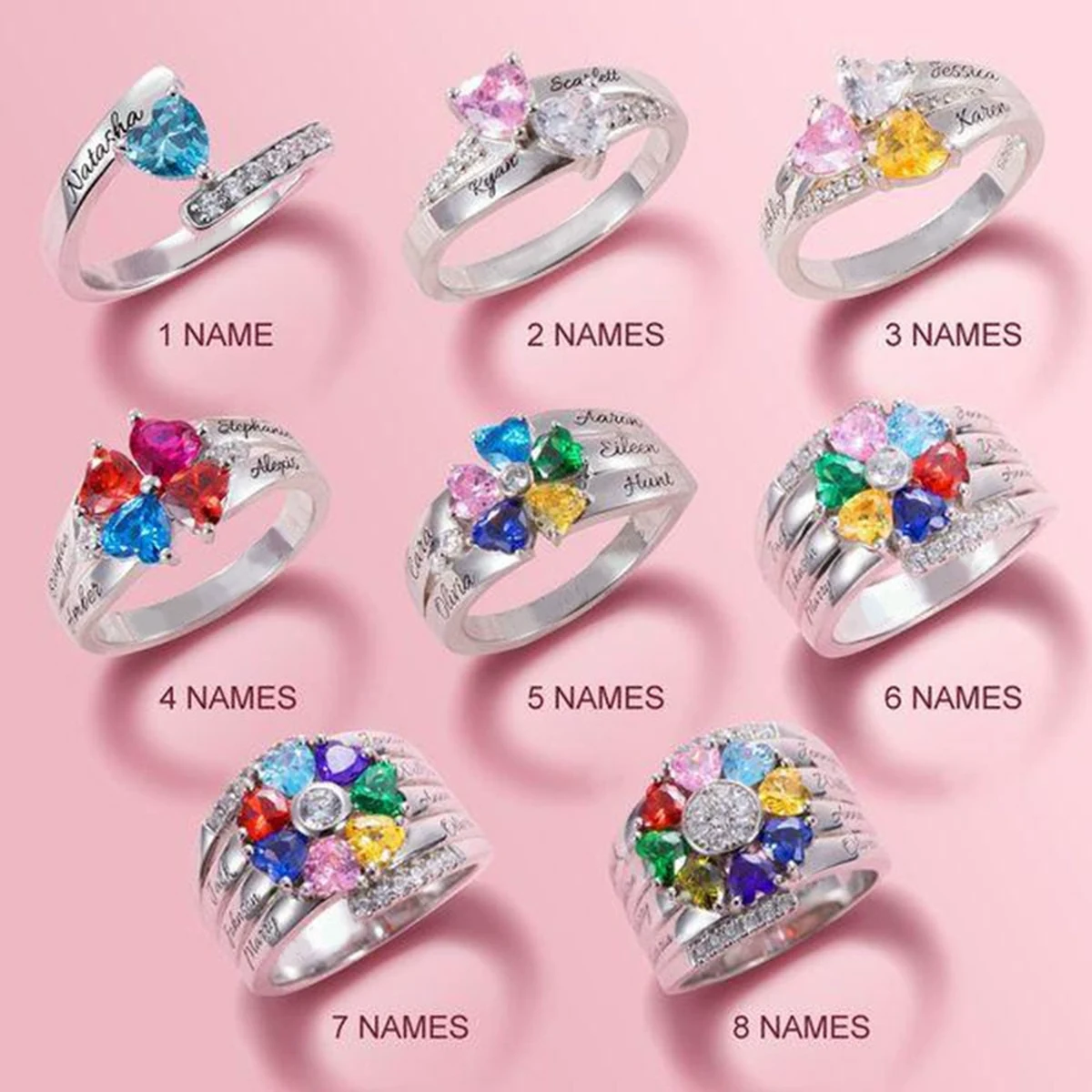
The Family Constellation Name Ring currently offers US sizes 6-10 and supports a personalized arrangement of names and birthstones. Use its live product page as the final source for available sizes, configuration, and ordering fields.
Measure when your hands are at a normal temperature
Fingers can change through the day. Heat, cold, exercise, hydration, and temporary swelling all affect fit. Avoid measuring immediately after coming in from cold weather or after strenuous activity. A useful approach is to measure once during the day and again in the evening, then compare the results.
If the measurements vary substantially, wait and repeat on another day. Consistency is more valuable than forcing one reading to match the size you expected.
Do not rely on a phone screen without calibration
Some online tools ask you to place a ring on a circle displayed on a phone. Screen size, browser zoom, and display scaling can change the circle. Unless the tool includes a reliable calibration step using a physical object of known size, use a millimeter measurement instead.
Likewise, avoid guessing from height, clothing size, age, or another family member’s hand. None of these provides a dependable ring measurement.
What to do when the measurement falls between sizes
A ring that is too small may not pass the knuckle; a ring that is too large may rotate or slip. When a result sits between two available sizes, consider:
- Whether the knuckle is wider than the base of the finger.
- Whether the band is slim or visually wide.
- Whether the wearer experiences normal daily swelling.
- Whether the product page recommends sizing up or down.
Do not assume a personalized ring can be resized after it is made. Ask customer care before ordering if the product guidance does not resolve the choice.
How to find a ring size for a surprise gift
If you can safely borrow a ring the recipient already wears on the intended finger, measure its inner diameter and return it promptly. You can also ask a close friend or family member who may know the size. Avoid pressing a ring into soap, tracing only the outside edge, or using a ring from a different finger without noting the difference.
If a reliable measurement is impossible, a personalized necklace or adjustable cuff may be a safer surprise because it does not depend on an exact finger size. Compare formats in the Amorieva collection.
Review size and personalization together
Ring size is only one part of the final check. Write every name and birth month in order, confirm the number of supported stones, and inspect the visualization for the selected family count. A design with several stones can look wider and more prominent than a one-stone version even when the band size is the same.
Use the engraving review checklist for spelling and order, and the birthstone guide to confirm every month.
Final ring-size checklist
- Measure the exact hand and finger that will wear the ring.
- Prefer the inside diameter of a ring that already fits.
- Use a non-stretch paper strip only as a careful backup.
- Measure several times at a normal hand temperature.
- Compare the result with the specific product chart.
- Consider knuckle width and the visual width of the design.
- Confirm names, birthstones, finish, and order before checkout.
- Ask for help before ordering when the result remains uncertain.
A few extra minutes spent measuring can protect the meaning already invested in a personalized ring. For additional ordering guidance, visit the Amorieva FAQ.